Griffith ex Lindley, 1847
Section Longicalcarata
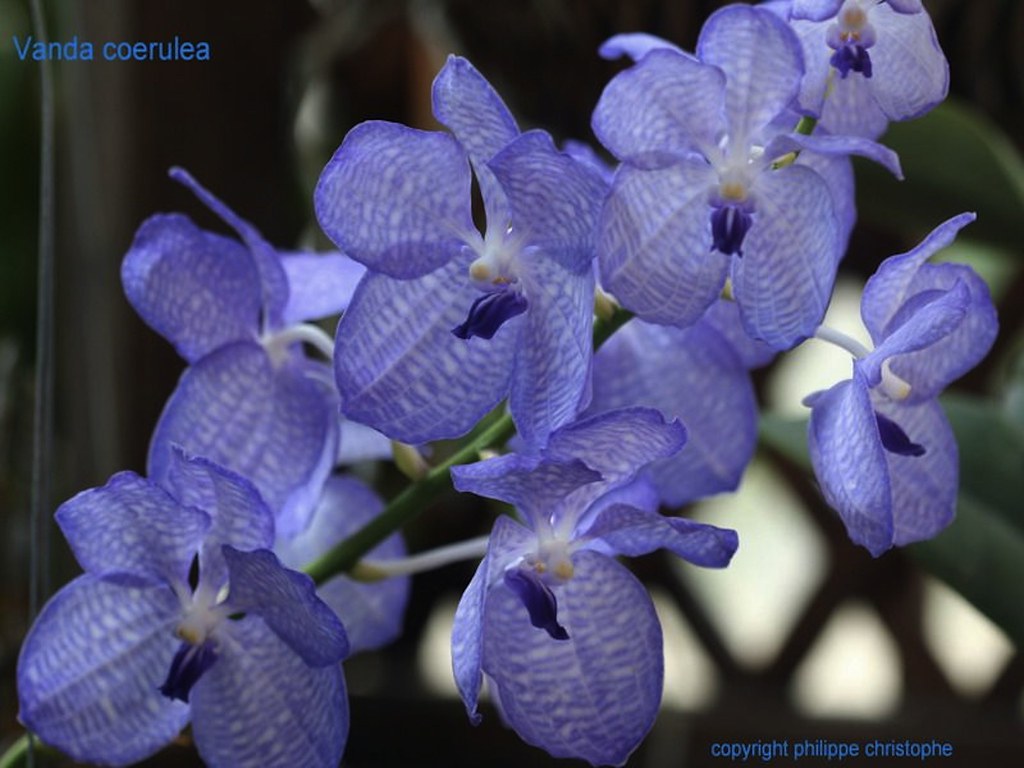
Vanda coerulea – bright azure flower spikeFor the color forms of Vanda coerulea described but not recognized by Kew, click below to go directly to the relevant section at the end of the article :
f. alba, the pure white form
f. delicata, the pink form
f. rogersii, the pale blue form
A legendary species within the genus, Vanda coerulea is truly exceptional for the size, shape, texture and, of course, the colour of its flowers.
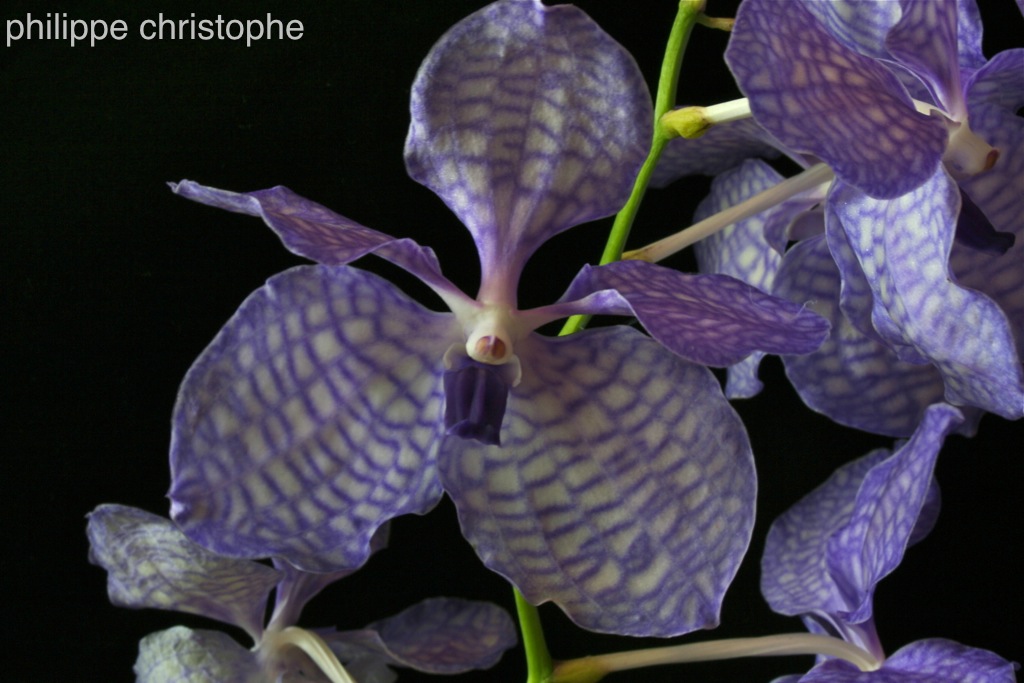
Blue being a colour very rarely encountered among orchids, Vanda coerulea has played a major role in hybridization. All blue-flowered Vanda hybrids, as well as many other intergeneric hybrids (Vandachostylis, Renantanda, etc.), have this species among their parents. But the contribution of Vanda coerulea to hybridization does not stop at colour: plants are cold-tolerant, vigorous, floriferous, and often flower several times a year, producing numerous large flowers along an inflorescence held well above the leaves, and the species tends to transmit these characteristics to its descendants. The tessellated flowers found in many hybrids, especially pink ones, are also inherited from Vanda coerulea.
In 1970, this species was listed under CITES Appendix I, but following the recent discovery of new populations, it was downgraded to Appendix II. This is encouraging news, but one can only hope that these sites will be preserved and not plundered: plants originating from wild collection, probably from Shan State in Myanmar, are already being found for sale in border markets and even in Bangkok.
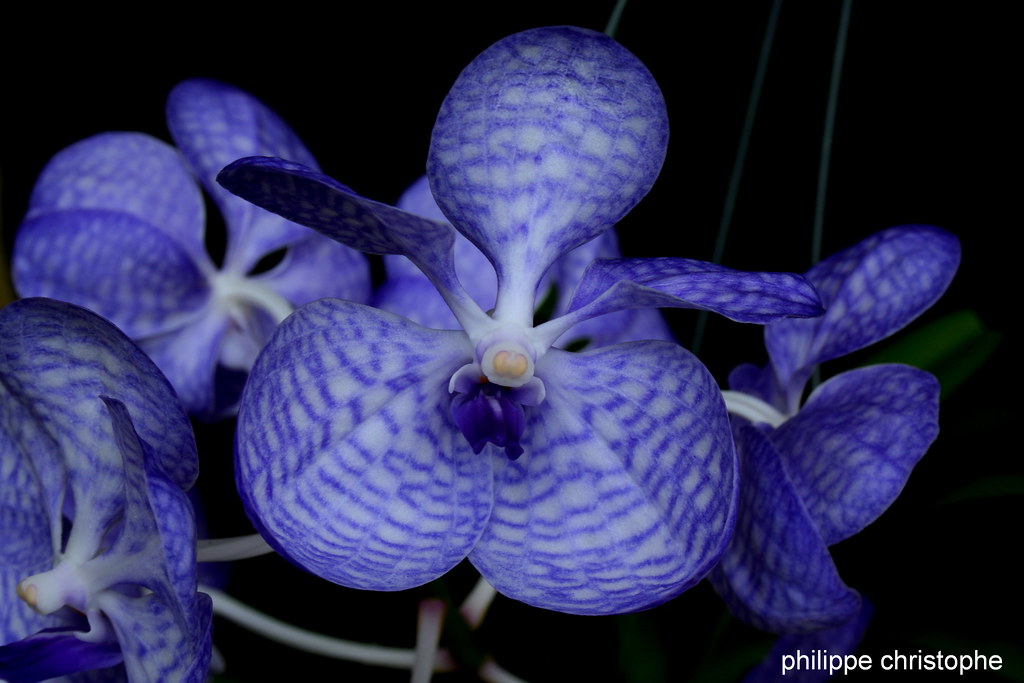
So-called “improved” plants of Vanda coerulea are found on the market, “improved” as opposed to so-called “jungle type” plants, with petals and sepals as long as wide, without any window between them, and very large flowers bearing untwisted petals. They result from multiple crossings intended to satisfy enthusiasts looking for spectacular specimens. These are also the plants commonly seen in competitions. However, the lateral lobes bent backward in a very sharp hook, an essential characteristic of Vanda coerulea, are often absent in these so-called “improved” forms. The leaves are also longer than those of plants found in their natural habitat.
De facto, Martin Motes notes in his work on the genus Vanda that, according to DNA analysis carried out by Dr Surawit Wannakrairoj in Thailand, these improved plants are in fact hybrids. It is therefore all the more important to preserve true Vanda coerulea.
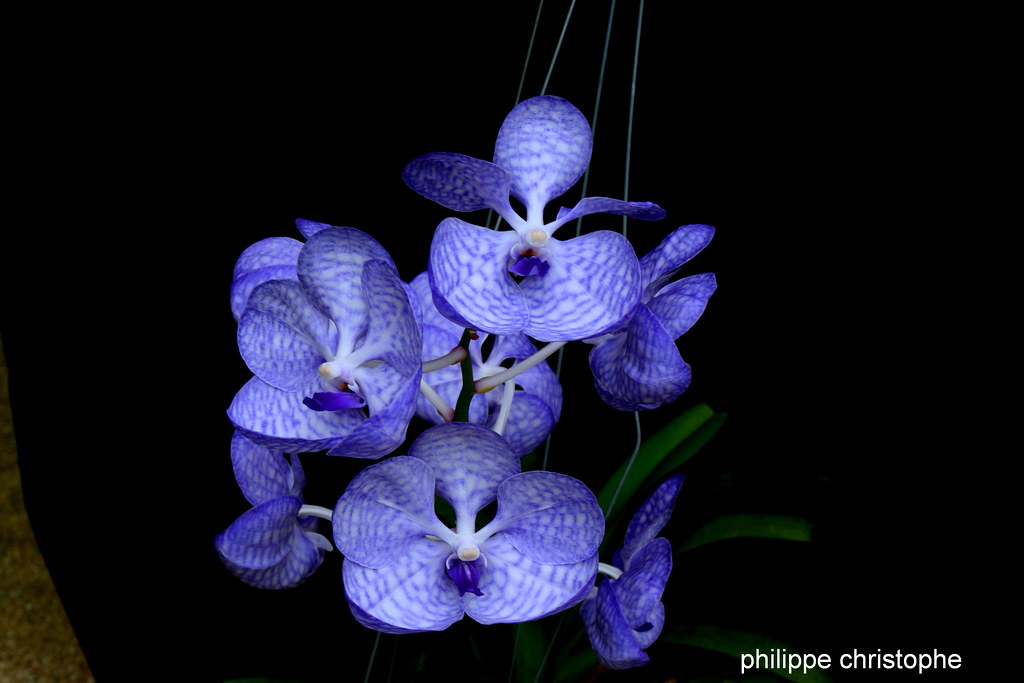
The features allowing easy distinction between a true Vanda coerulea and a hybrid are the sharply hooked lateral lobes, the angle of the leaves in relation to the stem, and the limited width of the plant.
Caeruleus in Latin means “blue”, and caerula refers to “the azure of the sky”.
Distribution
Northern Myanmar (Burma), southern and southwestern Yunnan in China, northeastern India (Khasia Hills, Assam), and northern Thailand.
Vernacular names
Myanmar: Moe Lone Hmine
China: Da Hua Wan Dai Lan (大花万代兰)
Manipur (India): Kwak Lei (ক্ৱাকলৈ)
Thailand: Fa Mui
Flowers
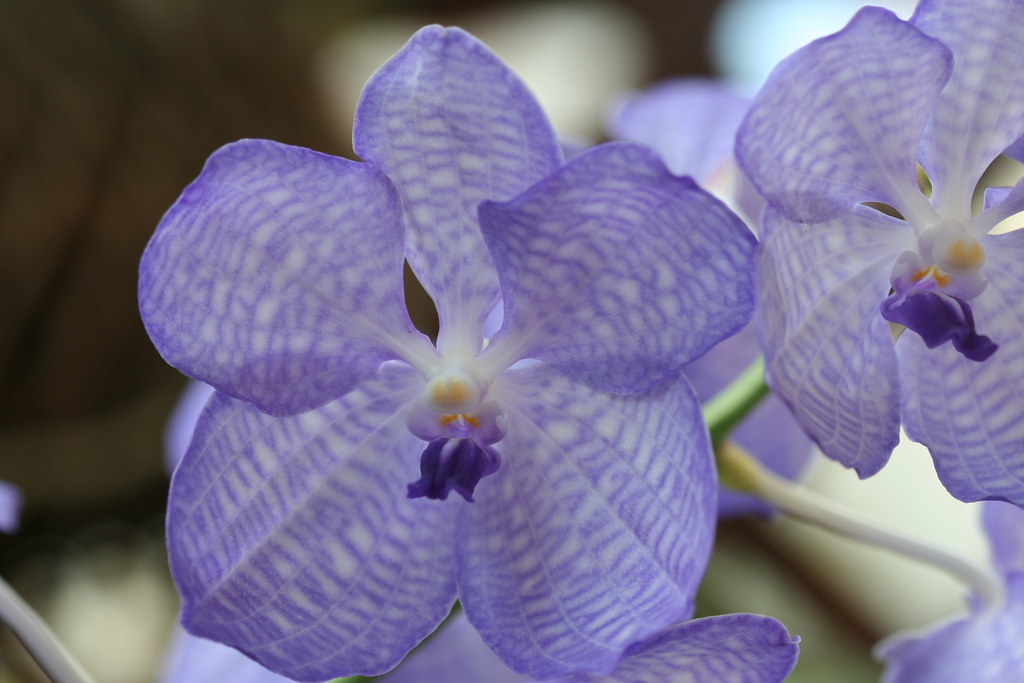
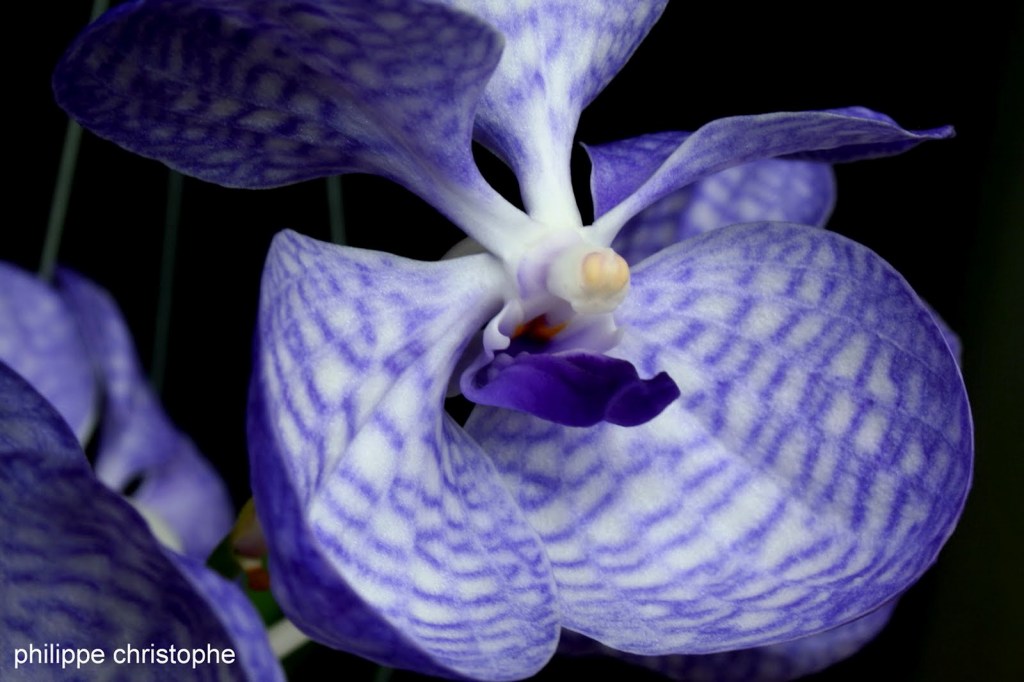
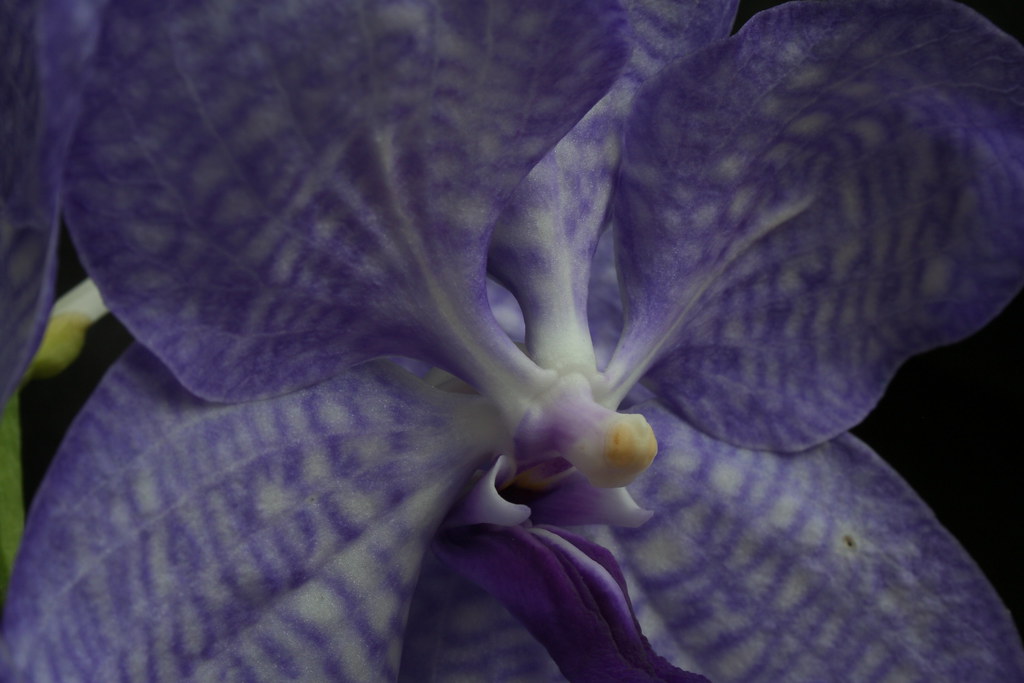
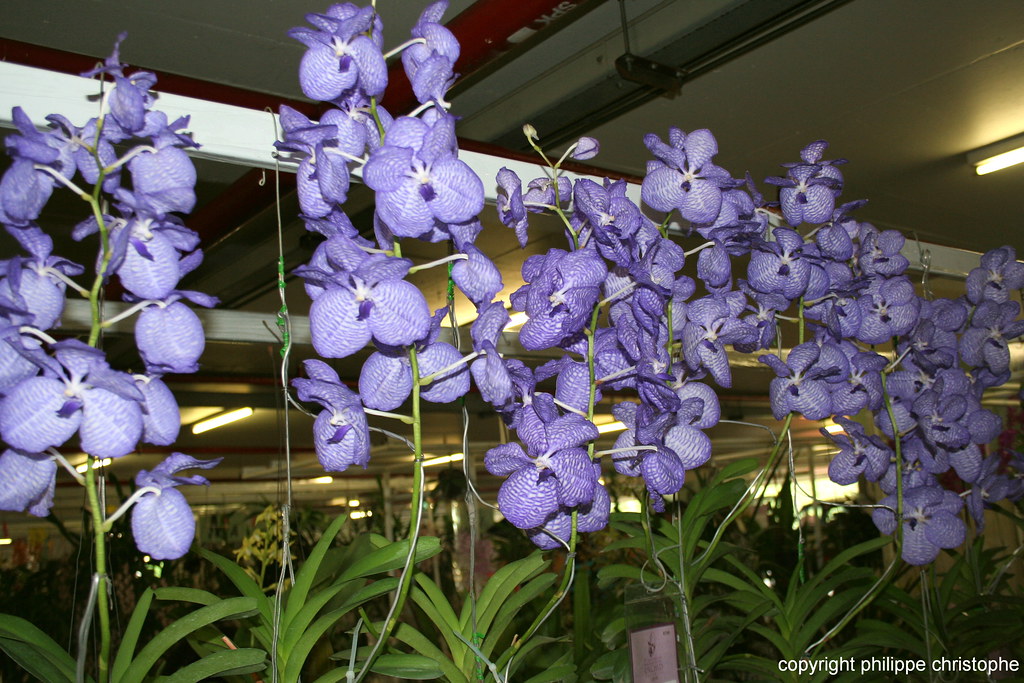
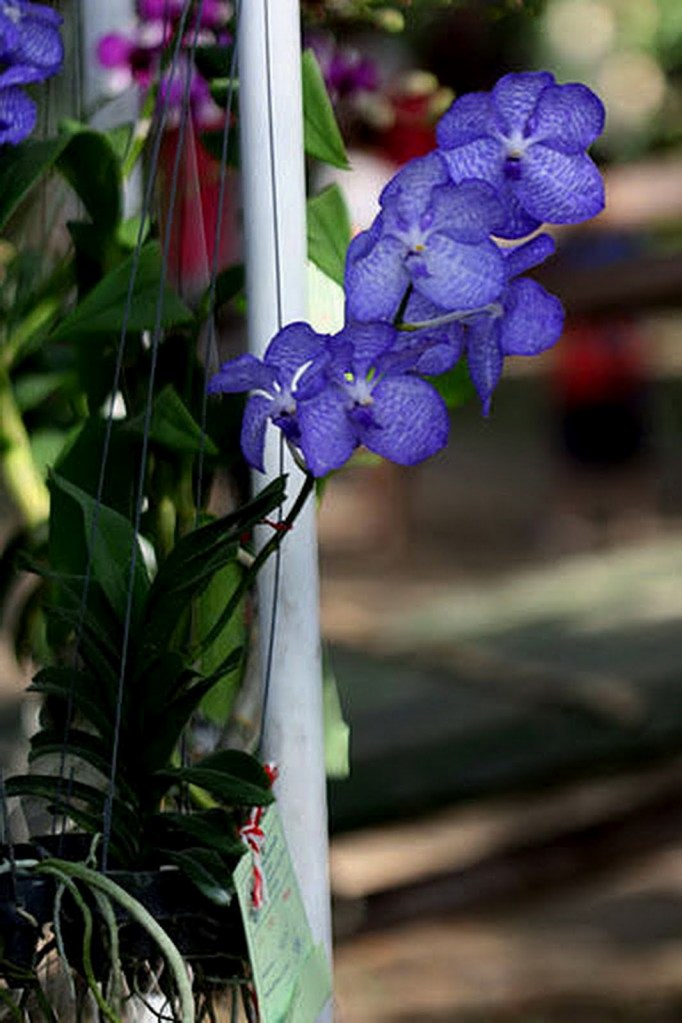
Usually 9 to 12 cm, more or less tessellated, ranging from lavender blue to deep blue, though a complete colour range exists from pure white to violet, including pink forms. Sepals and petals obovate, longer than wide. Petals twisted backward at 90 degrees. Flowers are paler and smaller when opening, becoming more intensely coloured with age. Labellum small for the genus, blue to dark violet. Mid-lobe oblong with two ridges, apex bituberculate. Lateral lobes bent backward and ending in a very fine hook. A true Vanda coerulea can often be distinguished from a hybrid by these two features alone. A single cross is enough for the hook to become less pronounced, blunt, or absent altogether. A trained eye will then easily distinguish the species from a hybrid.
Inflorescence
6 to 20 flowers. The inflorescence, erect or suberect, may reach up to 80 cm.
Plant size and leaves
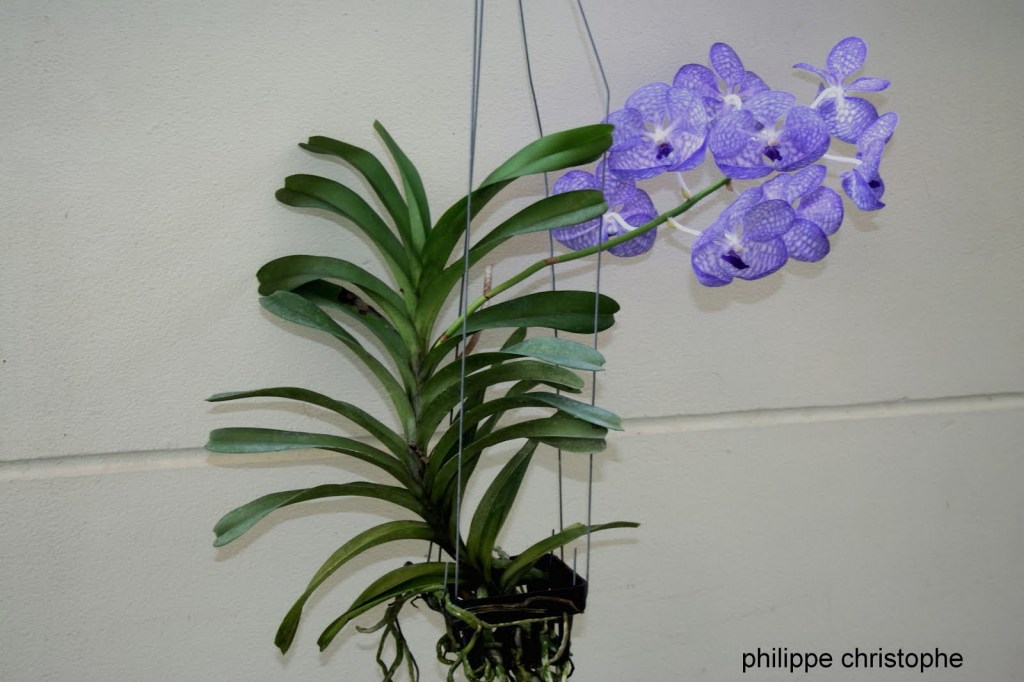
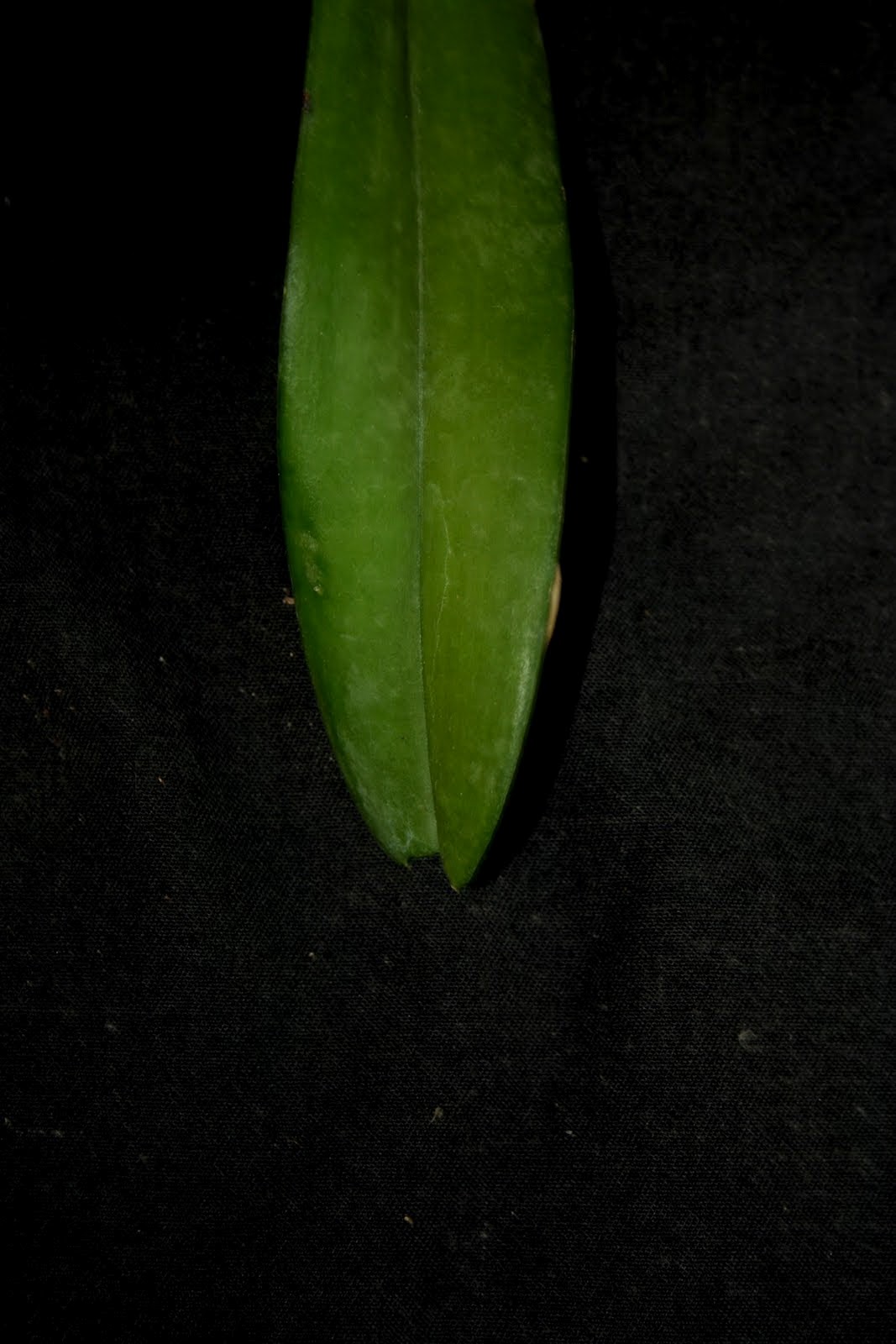
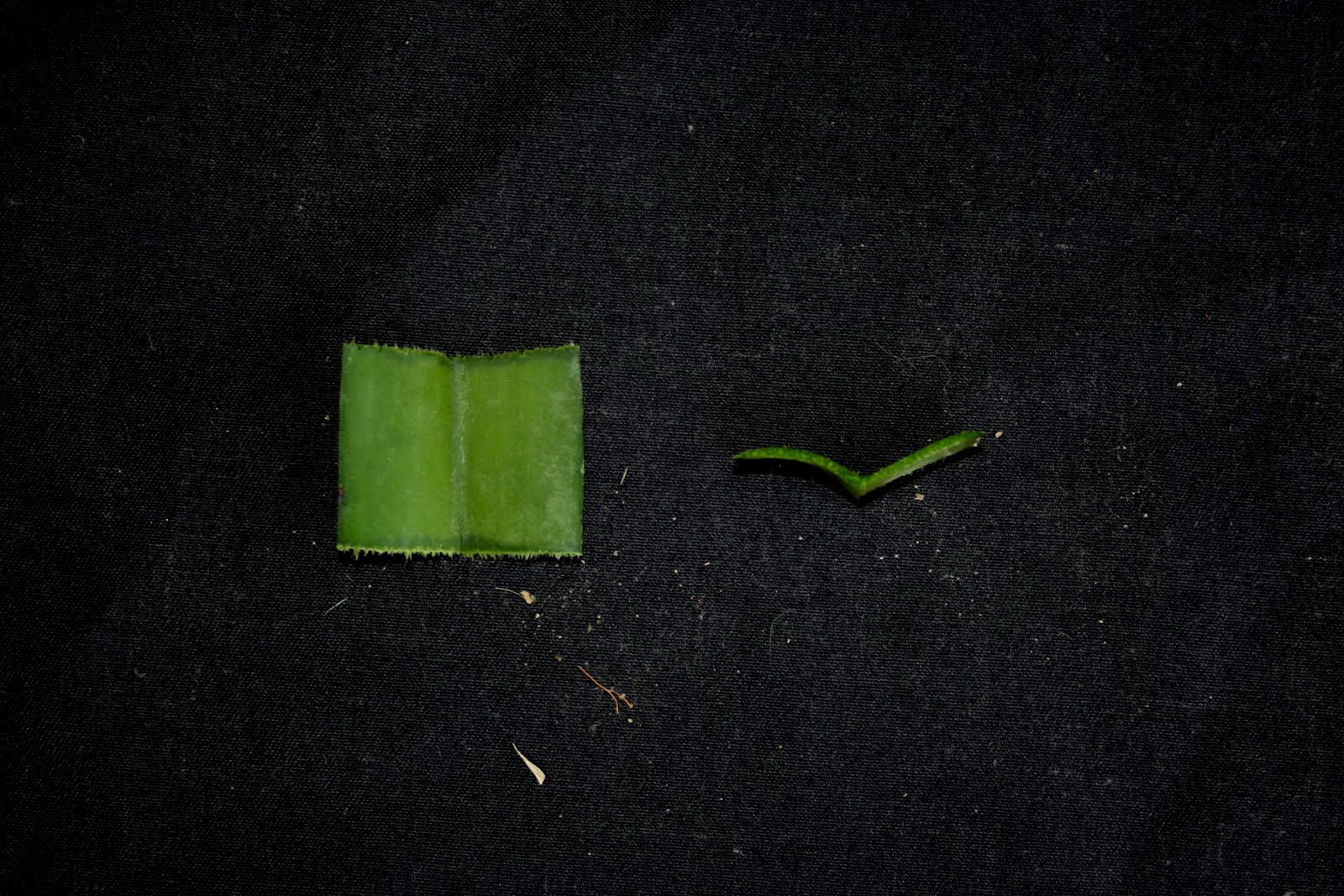
Large-sized plant that may exceed 1.50 m. However, specimens under 30 cm flower readily. The habit of the plant, together with the shape of the lateral lobes, allows an experienced grower to recognize a true Vanda coerulea immediately: the leaves form an extremely open angle with the stem, and the plant rarely exceeds 25 cm in width. Leaves coriaceous, ligulate, distichous, dentate at the apex, and forming a more open angle with the stem than in most other species.
References / Bibliography
Books and Monographs
- Roguenant, C. & Chiron, G. (2003). Vandas et genres voisins des orchidées spectaculaires. Belin, Tropicalia. Link
- Grove, D. L. (1995). Vandas and Ascocendas and their Combinations with Other Genera. Timber Press. Link
- Motes, M. R. (2021). The Natural Genus Vanda: A Monograph. Redland Press. Link
- O’Byrne, P. (2001). A to Z of South East Asian Orchid Species. Orchid Society of South East Asia. Link
- Renziana Vol. 3: Vanda (2013). Swiss Orchid Foundation. Link
Taxonomic and Botanical Database
- Plants of the World Online, Royal Botanic Gardens, Kew. Vanda coerulea (accepted species). Link — authoritative taxonomic treatment and native range.
Tip: When citing botanical facts (native range, synonyms, or formal names), reference Kew POWO for accepted nomenclature. For cultivation, morphology, and historical details, reference the books listed above.
 Vandaspecies