Vanda sanderiana
Section : Lamellaria
(Rchb.f.) Schlechter 1914
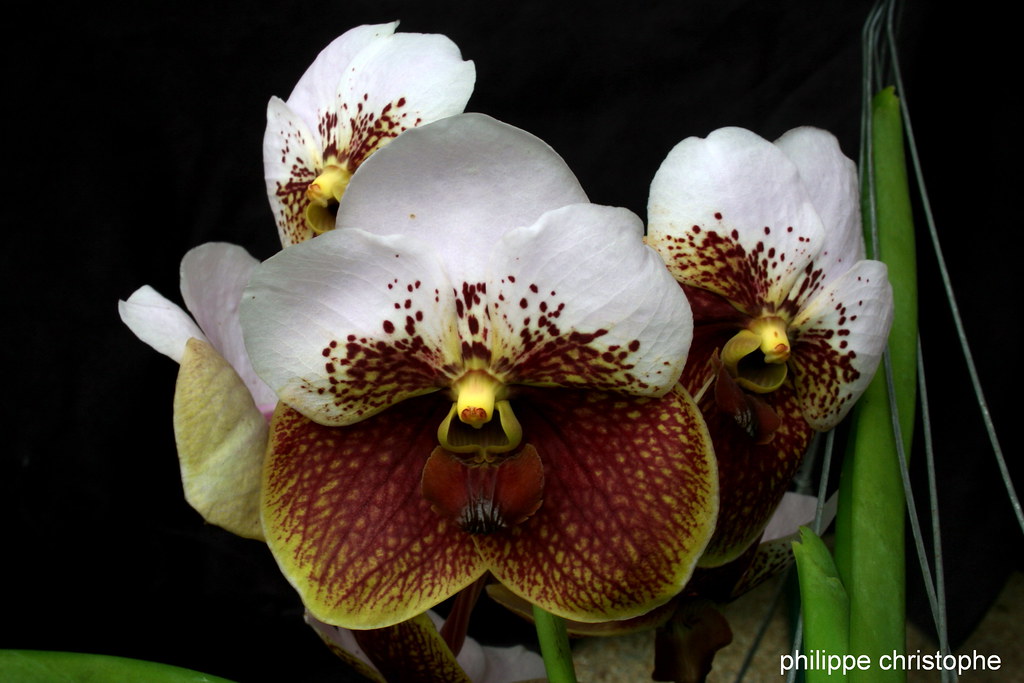
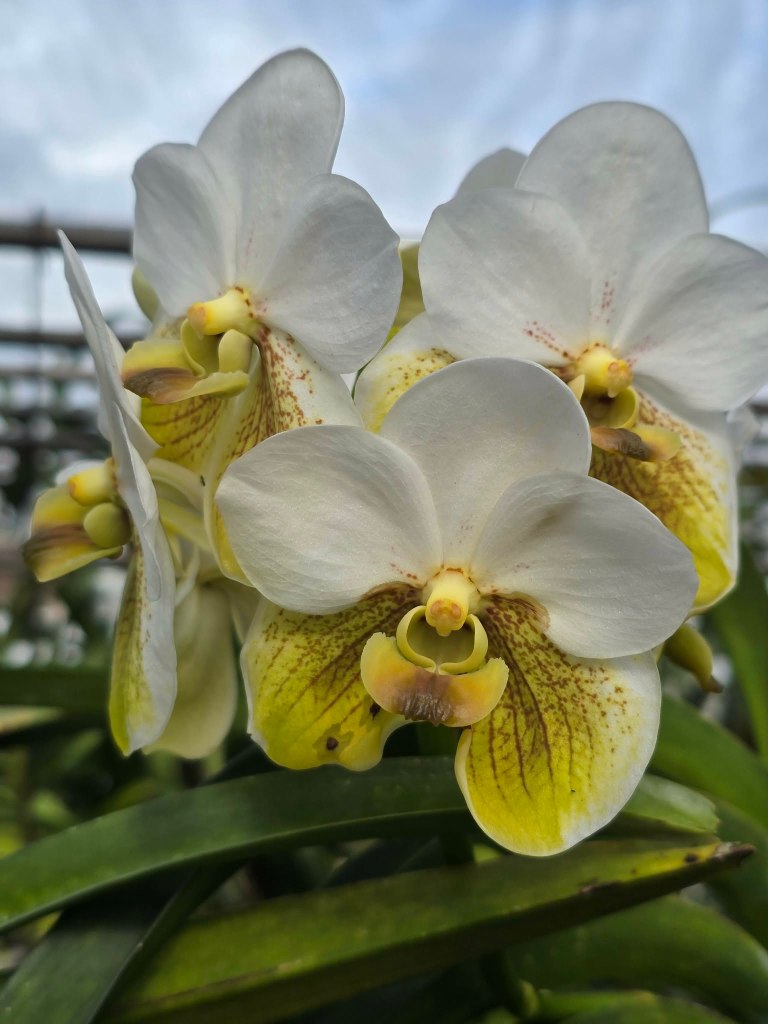
Vanda sanderiana is one of the most spectacular orchid species in the genus Vanda, producing giant flowers of exceptional size, substance and symmetry. Native to the southern Philippines, this legendary species has had a major influence on modern orchid breeding and remains one of the most important parents in Vanda hybridization worldwide. Nearly all modern flat large-flowered Vanda hybrids carry part of its genetic heritage.
Discovery and Explorers
In 1879, Henry Frederick Conrad Sander, the famous English horticulturist and exotic plant merchant, sent the Swiss collector Carl Roebelen to the Philippines to search for rare orchid species. In 1880, while exploring Mindanao, Roebelen heard reports of an extraordinary orchid bearing exceptionally large flowers.
His expedition was marked by dramatic events: his boat sank in a lake, and his temporary shelter was destroyed by an earthquake. Despite these difficulties, through the damaged walls of his hut he finally saw the orchid he had been searching for: Vanda sanderiana.
Roebelen immediately sent living specimens to Sander, who at that time was at the peak of his fame. During the 1880s and 1890s, an estimated one to two million plants passed through Sander’s famous greenhouses in St Albans, England. In 1895, Sander began recording orchid hybrids, leading to the first published register in 1905. His nephew David F. Sander continued this work, later adopted by the Royal Horticultural Society in 1961.
Pressed flowers were also sent to Heinrich Gustav Reichenbach, who formally described the species in 1882 and named it Vanda sanderiana in honour of Sander.
Carl Roebelen later settled in Thailand, married locally and had a son. During expeditions in Laos he discovered the palm Phoenix roebelenii, named after him. During World War I his property was confiscated and he was interned in India. After his release he returned to Thailand. In December 1927, while again searching in Laos for seeds of Phoenix roebelenii, he contracted malaria and died in the jungle, where local villagers buried him.
Taxonomy
In 1914, Rudolf Schlechter created the genus Euanthe and transferred Vanda sanderiana into it as Euanthe sanderiana. In his 1993 classification, Christenson treated Euanthe as a subgenus of Vanda, whereas Phillip Cribb of Kew continued to recognise it separately.
DNA analysis and modern morphological studies finally confirmed in 2013 that the species should be definitively returned to the genus Vanda.
Current Status and Conservation
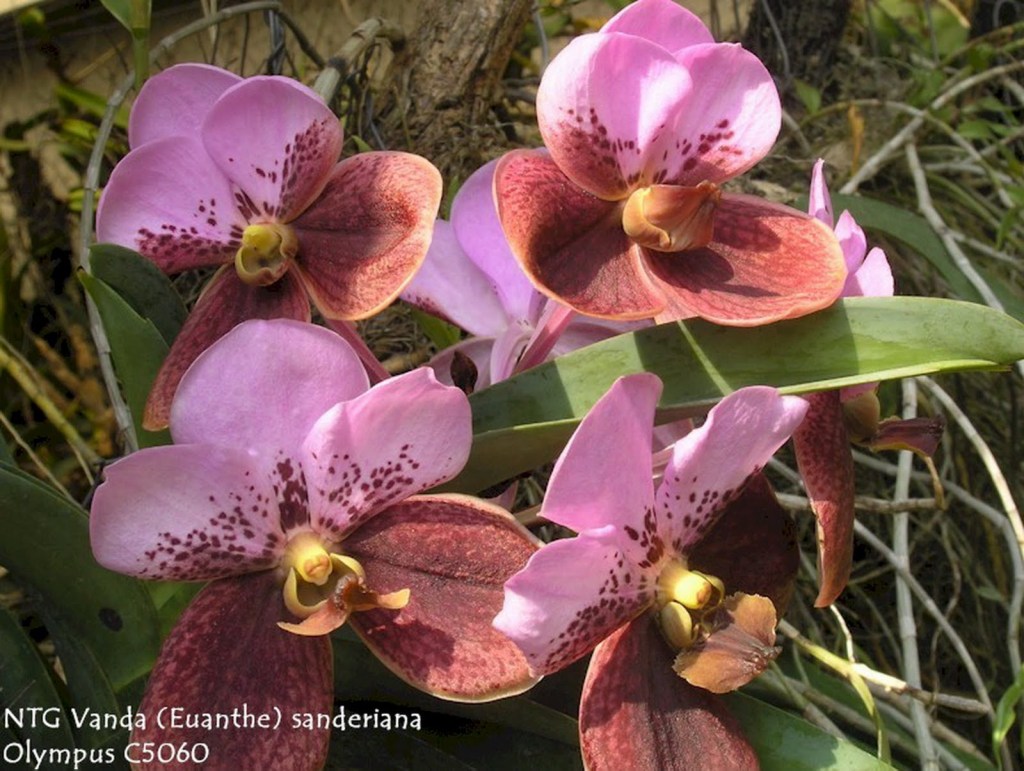
Vanda sanderiana appears to have disappeared from much of its original natural habitat and is considered extremely rare in the wild. However, it continues to survive through specialist orchid growers, private collections, and conservation initiatives in the Philippines and Southeast Asia.
Several local associations and private collectors actively contribute to preserving this iconic Philippine orchid species.
Botanical Characteristics
Distinctive botanical features:
- Broad, flat sepals and petals at the base.
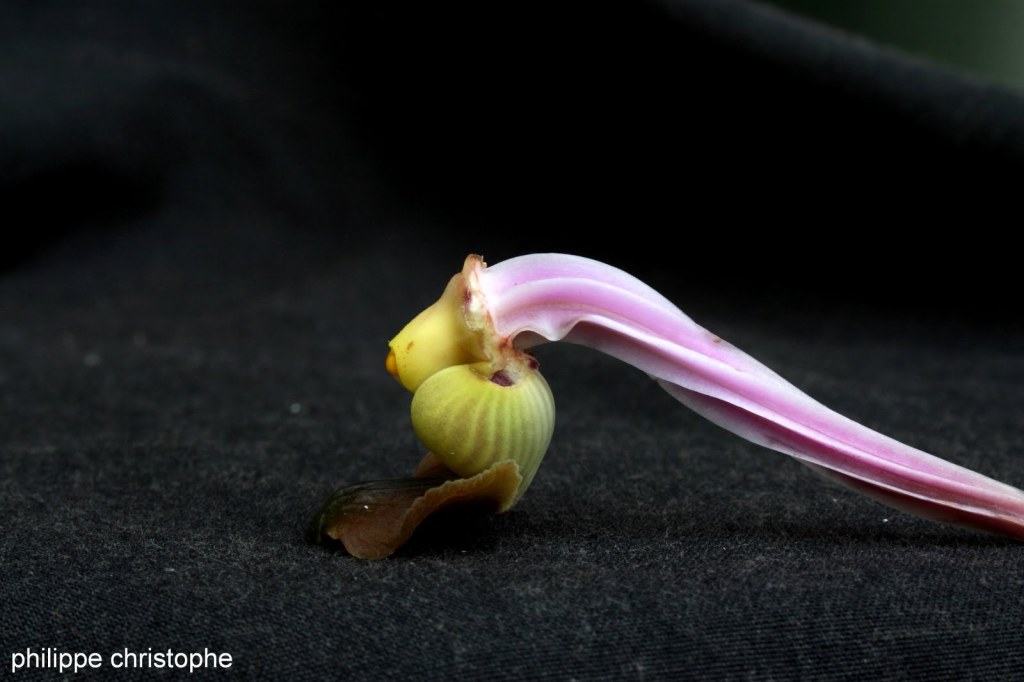
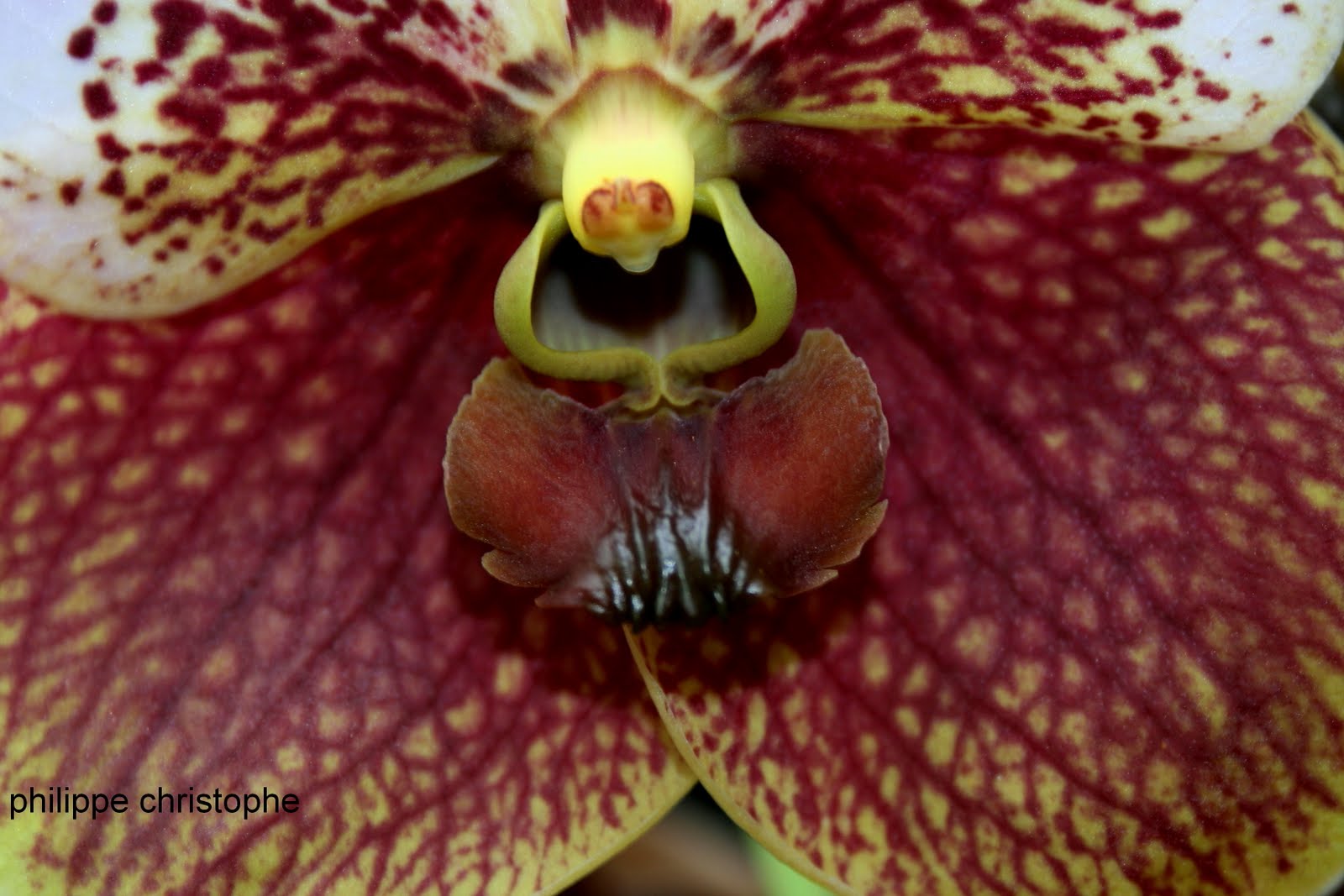
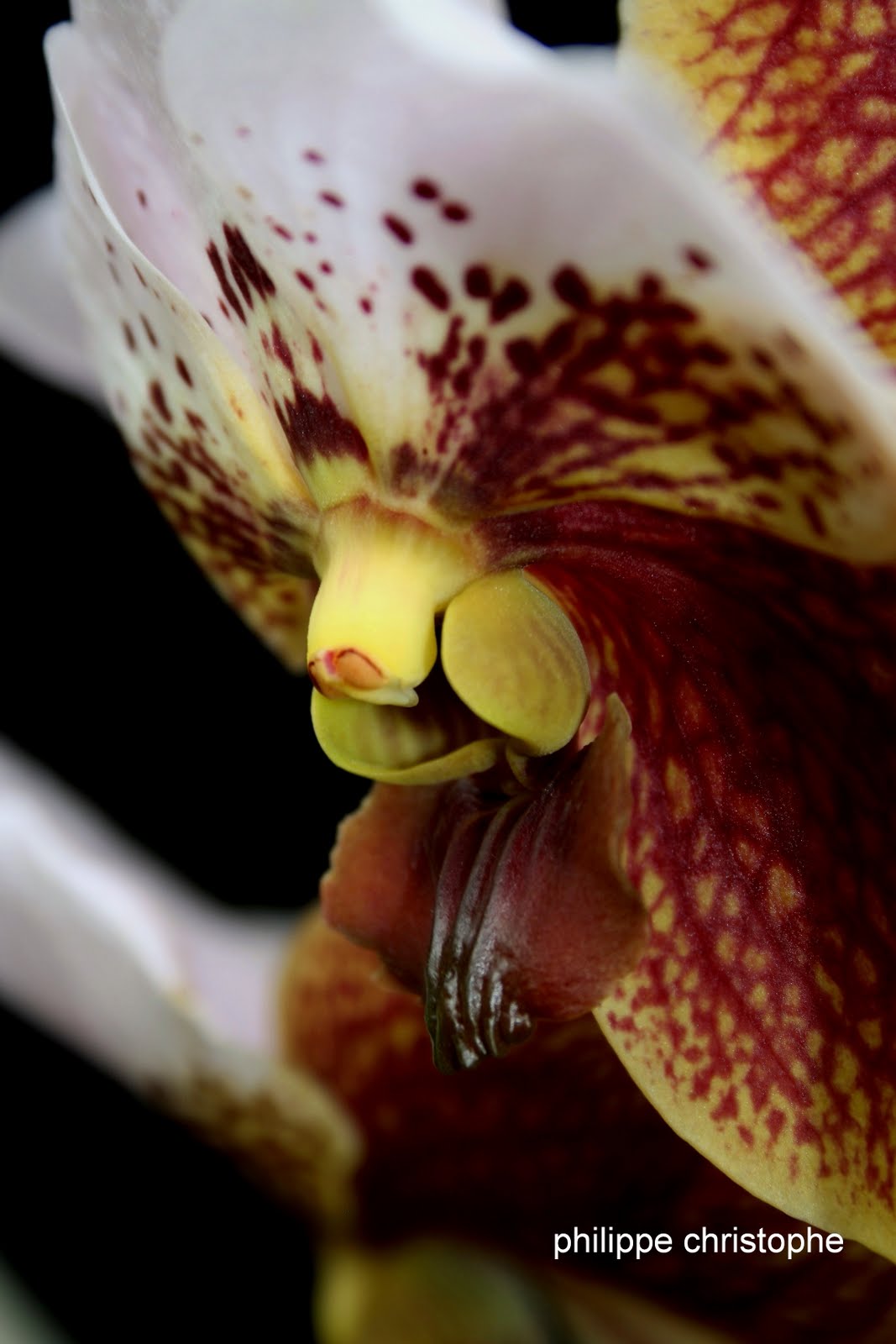
- Bilobed lip with inflated balloon-shaped hypochile.
- Absence of spur, which clearly distinguishes the species from hybrids.
- Closely spaced leaves, thin and brittle.
- Slow growth and relatively weak root development.
The contribution of Vanda sanderiana to orchid hybridization is immense. Its flowers are large, flat, symmetrical and highly variable in colour and pattern. Inflorescences are long, erect and carry numerous well-arranged flowers.
However, several less desirable traits are also transmitted to hybrids: annual flowering rhythm, slow vegetative growth, limited root production and sensitivity to cold temperatures.
Forms and Historical Varieties
The form albata is highly sought after for its green-white flowers. Historical varieties such as var. froebeliana and var. labelloviridis have also been described, but none are currently accepted by Kew, which treats them as synonyms of the species.
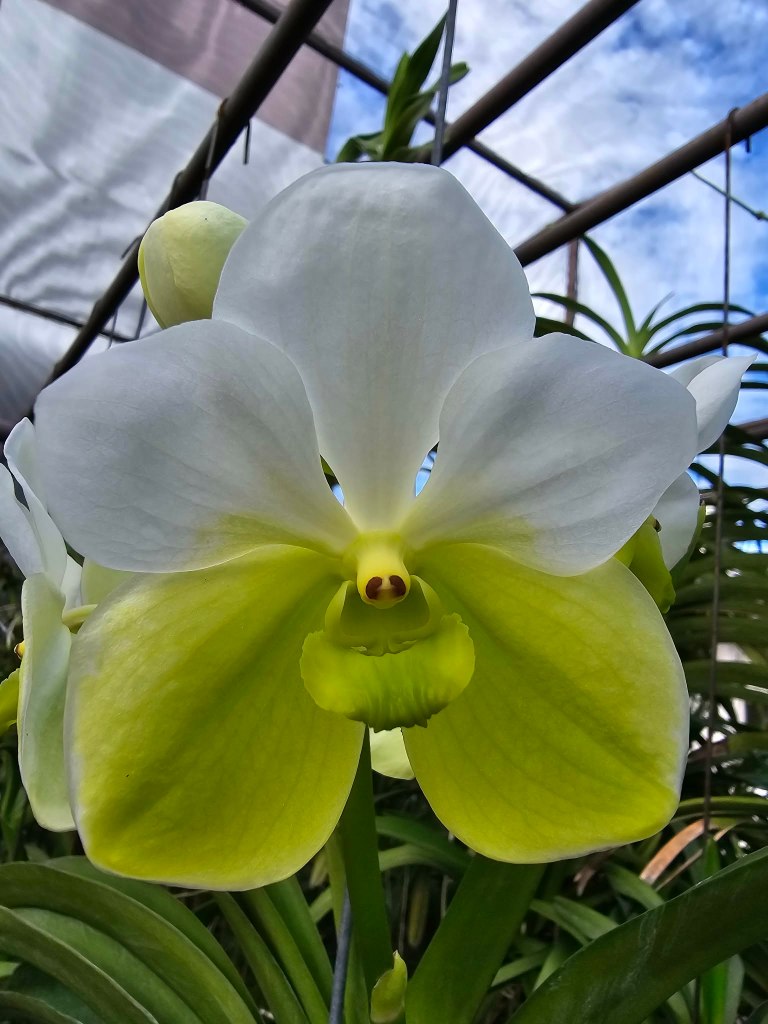
Synonyms: Esmeralda sanderiana, Euanthe sanderiana, Euanthe sanderiana f. albata, Euanthe sanderiana f. immaculata.
Distribution and Vernacular Name
Endemic to southern Philippines, especially Mindanao: North Cotabato, South Cotabato, Davao del Norte, Davao del Sur, Zamboanga del Norte and Zamboanga del Sur. The species is probably extinct in its original natural environment.
Vernacular name: Waling-Waling.
Flowers and Inflorescence
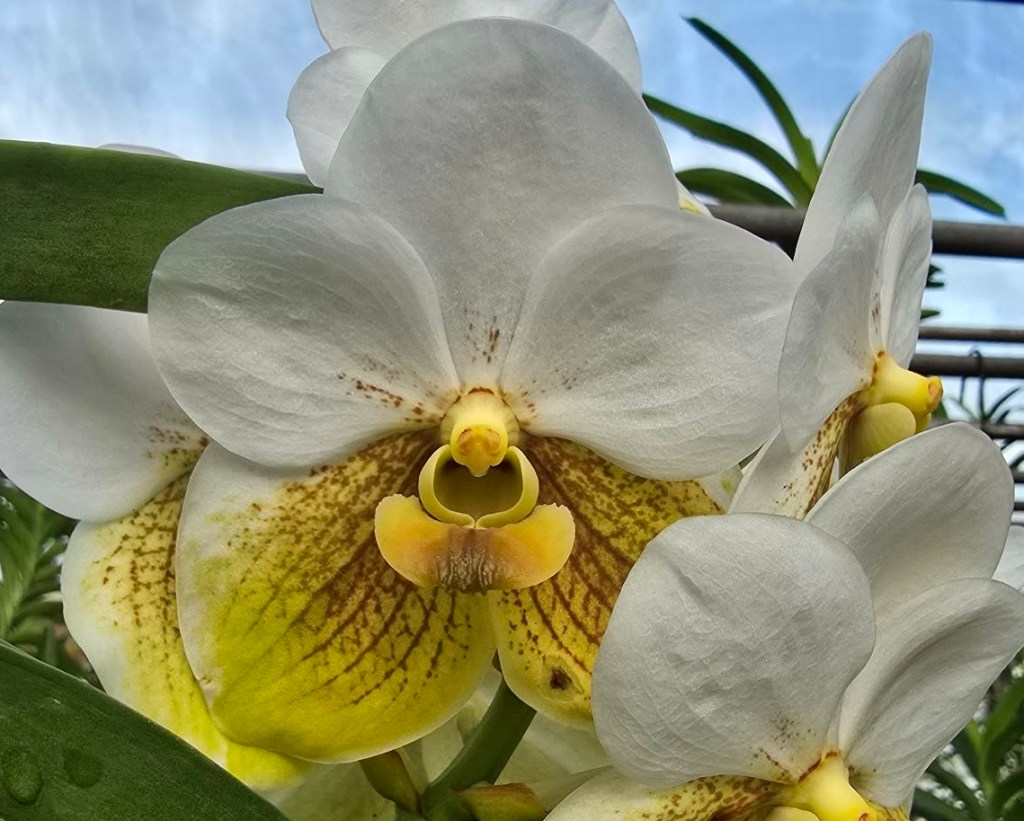
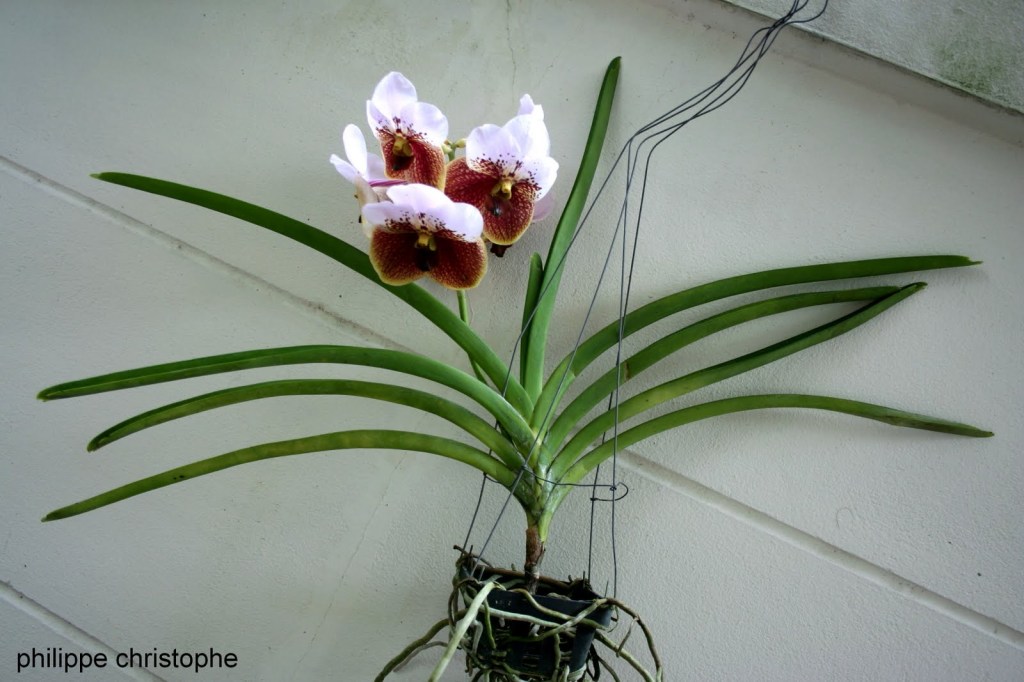
Flowers measure 8 to 12 cm across, exceptionally reaching 15 cm in selected cultivars. They are flat, full and well-shaped, with overlapping tepals.
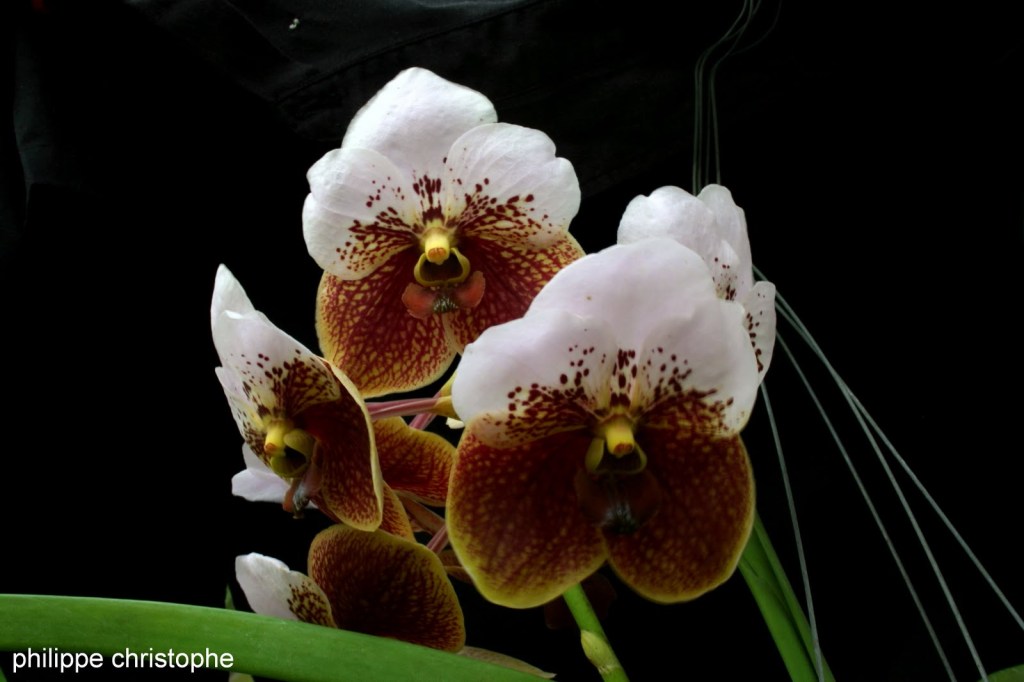
Lateral sepals are tawny yellow with dark cinnamon to reddish-brown veins. Petals and dorsal sepal range from pink to white, usually marked with cinnamon spotting.
The flowers are not fragrant.
Inflorescences are strongly erect, 20 to 30 cm long, bearing 7 to 25 flowers, with 1 to 6 opening simultaneously.
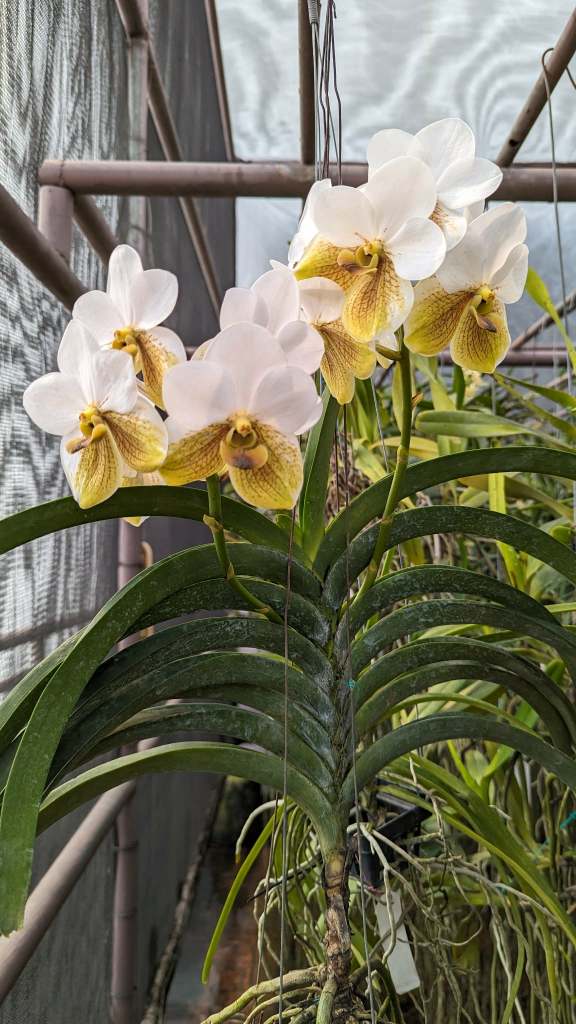
Plant
This is a large-growing orchid species reaching one meter or more.
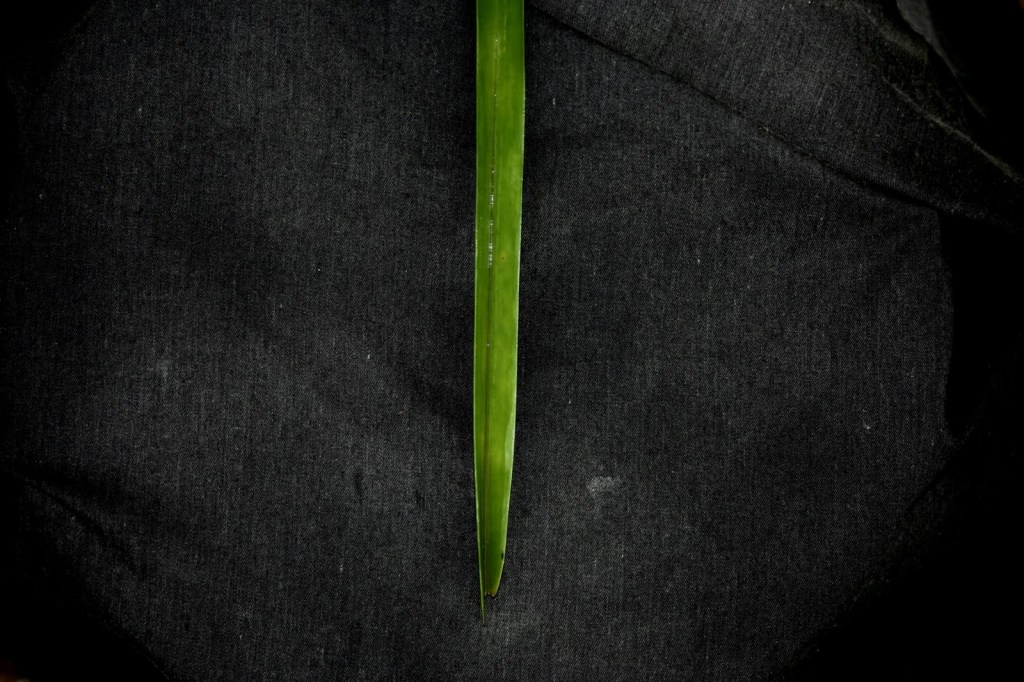
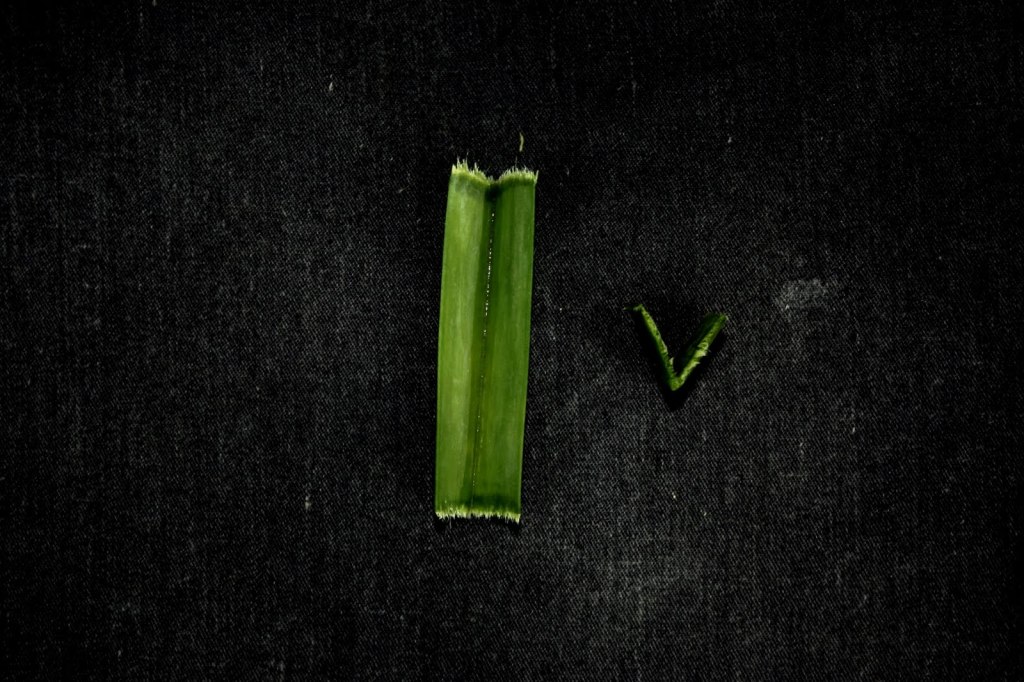
Leaves are coriaceous, recurved, truncate or bilobed at the apex, brittle and highly distinctive.
Version française
Vanda sanderiana
Section : Lamellaria
(Rchb.f.) Schlechter 1914
Découverte et explorateurs
En 1879, Henry Frederick Conrad Sander, célèbre horticulteur anglais et marchand de plantes exotiques, envoya le collectionneur suisse Carl Roebelen aux Philippines pour rechercher des orchidées rares. En 1880, lors de l’exploration de Mindanao, Roebelen reçut des rapports sur une orchidée extraordinaire aux fleurs exceptionnellement grandes.
Son expédition fut marquée par des événements dramatiques : son bateau fit naufrage dans un lac et son abri temporaire fut détruit par un tremblement de terre. Malgré ces difficultés, à travers les murs endommagés de sa cabane, il aperçut enfin l’orchidée qu’il cherchait : Vanda sanderiana.
Roebelen envoya immédiatement des spécimens vivants à Sander, alors à l’apogée de sa renommée. Dans les années 1880 et 1890, on estime qu’un à deux millions de plantes passèrent par les célèbres serres de Sander à St Albans, en Angleterre. En 1895, Sander commença à enregistrer les hybrides d’orchidées, aboutissant au premier registre publié en 1905. Son neveu David F. Sander poursuivit ce travail, repris plus tard par la Royal Horticultural Society en 1961.
Des fleurs séchées furent également envoyées à Heinrich Gustav Reichenbach, qui décrivit officiellement l’espèce en 1882 et la nomma Vanda sanderiana en l’honneur de Sander.
Carl Roebelen s’installa ensuite en Thaïlande, épousa une locale et eut un fils. Lors d’expéditions au Laos, il découvrit le palmier Phoenix roebelenii, nommé en son honneur. Pendant la Première Guerre mondiale, sa propriété fut confisquée et il fut interné en Inde. Après sa libération, il retourna en Thaïlande. En décembre 1927, alors qu’il cherchait à nouveau des graines de Phoenix roebelenii au Laos, il contracta le paludisme et mourut dans la jungle, où les habitants locaux l’inhumèrent.
Taxonomie
En 1914, Rudolf Schlechter créa le genre Euanthe et transféra Vanda sanderiana dans ce genre sous le nom de Euanthe sanderiana. Dans sa classification de 1993, Christenson considéra Euanthe comme un sous-genre de Vanda, tandis que Phillip Cribb de Kew continua à le reconnaître séparément.
Les analyses ADN et les études morphologiques modernes ont finalement confirmé en 2013 que l’espèce devait être définitivement rattachée au genre Vanda.
Statut actuel et conservation
Vanda sanderiana semble avoir disparu de la majeure partie de son habitat naturel d’origine et est considérée comme extrêmement rare à l’état sauvage. Cependant, elle continue de survivre grâce aux horticulteurs spécialisés, aux collections privées et aux initiatives de conservation aux Philippines et en Asie du Sud-Est.
Plusieurs associations locales et collectionneurs privés contribuent activement à la préservation de cette orchidée emblématique des Philippines.
Caractéristiques botaniques
- Sépales et pétales larges et plats à la base.
- Lèvre bilobée avec hypochile gonflé en forme de ballon.
- Absence d’éperon, caractéristique distinctive par rapport aux hybrides.
- Feuilles rapprochées, fines et cassantes.
- Croissance lente et développement racinaire relativement faible.
La contribution de Vanda sanderiana à l’hybridation des orchidées est immense. Ses fleurs sont grandes, plates, symétriques et très variables en couleur et motif. Les inflorescences sont longues, dressées et portent de nombreuses fleurs bien disposées.
Cependant, plusieurs traits moins souhaitables sont également transmis aux hybrides : floraison annuelle, croissance végétative lente, production racinaire limitée et sensibilité au froid.
Formes et variétés historiques
La forme albata est très recherchée pour ses fleurs vert-blanc. Des variétés historiques telles que var. froebeliana et var. labelloviridis ont également été décrites, mais aucune n’est actuellement acceptée par Kew, qui les considère comme synonymes de l’espèce.
Synonymes : Esmeralda sanderiana, Euanthe sanderiana, Euanthe sanderiana f. albata, Euanthe sanderiana f. immaculata.
Distribution et noms vernaculaires
Endémique du sud des Philippines, en particulier Mindanao : North Cotabato, South Cotabato, Davao del Norte, Davao del Sur, Zamboanga del Norte et Zamboanga del Sur. L’espèce est probablement éteinte dans son habitat naturel d’origine.
Nom vernaculaire : Waling-Waling.
Fleurs et inflorescence
Les fleurs mesurent de 8 à 12 cm de diamètre, atteignant exceptionnellement 15 cm pour certaines sélections. Elles sont plates, pleines et bien formées, avec des tépales se chevauchant.
Les sépales latéraux sont jaune fauve avec des veines brun cannelle à rougeâtre. Les pétales et le sépale dorsal varient du rose au blanc, généralement marqués de taches cannelle.
Les fleurs ne sont pas parfumées. Les inflorescences sont fortement dressées, longues de 20 à 30 cm, portant de 7 à 25 fleurs, dont 1 à 6 s’ouvrent simultanément.
Plante
C’est une espèce d’orchidée de grande taille atteignant un mètre ou plus. Les feuilles sont coriaces, recourbées, truncate ou bilobées à l’apex, cassantes et très distinctives.
References / Bibliography
- Unraveling a Rainbow, A Reappraisal of Vanda sanderiana, American Orchid Society Bulletin, Volume 57, Number 8, August 1988, Martin R. Motes.
- Unraveling a Rainbow, The Golden Heritage of Vanda dearei, American Orchid Society Bulletin, Volume 57, Number 11, November 1988, Martin R. Motes.
- Vandas and Ascocendas, David L. Grove, 1995.
- Vandas, their Botany, History, and Culture, Martin R. Motes, 1997.
- A to Z of South East Asian Orchid Species Vol. 2, Peter O’Byrne, 2011.
- Jim Cootes, The Orchids of the Philippines, 2013.
- Jim Cootes & George Tiong, The Vanda Species of the Philippines, Renziana Vol. 3, 2013.
- Vandas that amazed the world: V. coerulea and V. sanderiana, Phillip Gribb & Lauren Gardiner, Renziana Vol. 3, 2013.
- The Natural Genus Vanda, Martin R. Motes, 2021.
- Vandas et genres voisins des orchidées spectaculaires, C. Roguenant & G. Chiron, Kew database species.
 Vandaspecies