Vanda luzonica
Loher ex Rolfe 1915
Section Deltoglossa
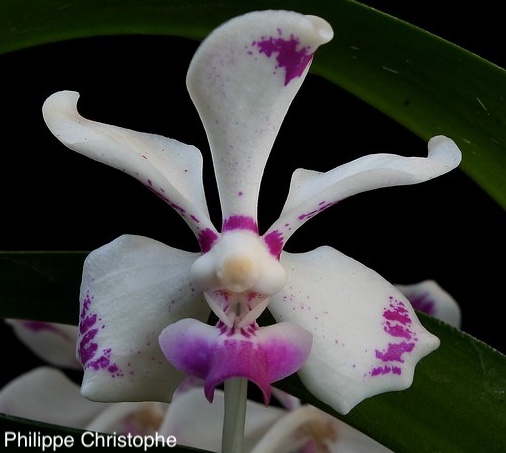
Vanda luzonica, with its attractive colors and an extremely graceful color pattern, is among the most delicate and attractive species of the genus.
Once abundant on the slopes of Mount Pinatubo, on the island of Luzon in the Philippines, the devastating volcanic eruption of 1991 led to a sharp decline, if not a near disappearance of this species in its natural habitat. However, as the species has been widely propagated by both amateurs and professionals, this is one of the cases where cultivation has contributed to its preservation. Still, proper identification remains essential, as many specimens labeled as Vanda luzonica are in fact not.
The name of the species, of course, refers to the island of Luzon (Luzón in Spanish) in the Philippines.
This is typically a plant of the Deltoglossa section. The plants are large and robust, with broad strap-like leaves and flowers bearing a delta-shaped lip, as well as a short, fleshy, trilobed column.
Vanda luzonica is often confused with Vanda suavis (Vanda tricolor var. suavis). These taxa originate from geographically distant regions. The flowers may show some morphological similarities and a color pattern that can lead to confusion, but the differences are clear and consistent.
The elegance of Vanda luzonica has naturally led breeders to use it extensively in hybridization. Thus, Vanda luzonica is a major contributor to pink to red hybrids, transmitting strong pigmentation and a characteristic pattern. Its color is dominant over several generations and can be found up to six generations deep in certain hybrid lines. Even more notably, this pigmentation tends to dominate other colors, particularly yellow and brown tones.
Other characteristics are also appreciated, such as flower size, around 6.5 cm, as well as the number of flowers per inflorescence, which can reach up to 20, exceeding that of many other large-flowered species.
When Vanda luzonica is crossed with Vanda sanderiana, the result is Vanda Manila, a major hybrid, as most modern pink hybrids have it in their background.
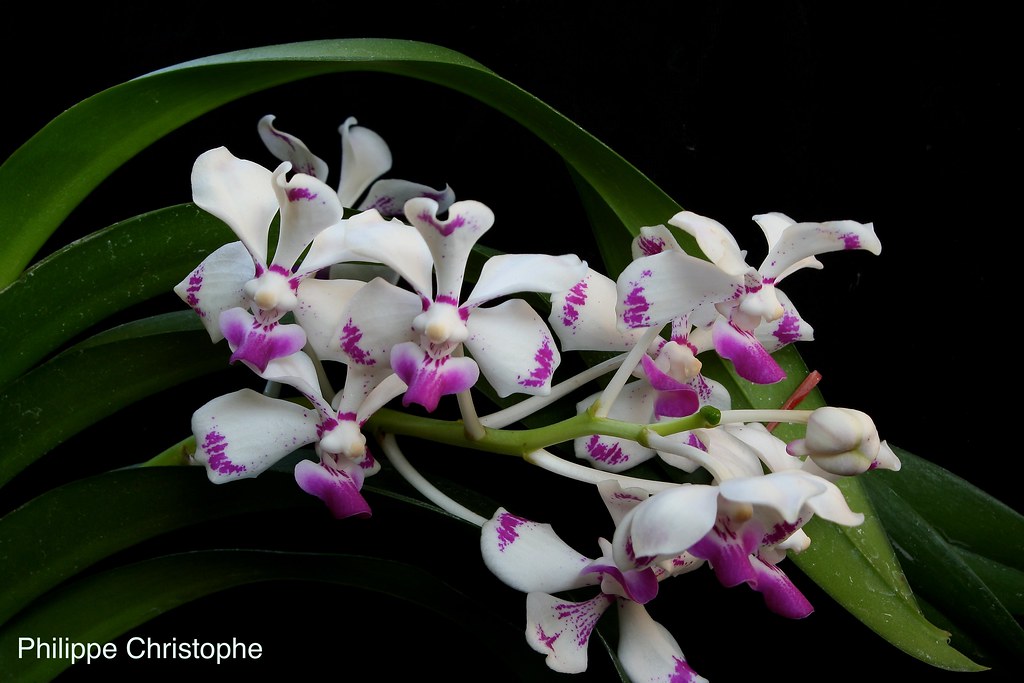
Vanda luzonica and the misidentification with Vanda Boschii
Vanda Boschii is the grex resulting from the cross between Vanda luzonica and Vanda tricolor. It was created in 1927, shortly after the description of Vanda luzonica in 1915.
Many plants presented as Vanda luzonica are in fact Vanda Boschii. This confusion is widespread and even appears in exhibitions, with some awarded specimens (including by the AOS) actually belonging to this grex, as noted by Dr. Martin Motes. This mistake is also found in specialized literature and on numerous websites.
To understand this confusion, it is important to note that the RHS registers hybrids only at the species level. Thus, Vanda Boschii is recorded as Vanda luzonica × Vanda tricolor. Botanical varieties are not included in the grex name.
Plants of Vanda Boschii are often derived from Vanda tricolor var. suavis, which strongly influences their appearance. These are therefore the traits to observe when distinguishing Vanda luzonica from Vanda Boschii.
In Vanda luzonica, the coloration, pink to magenta, appears as bars and streaks concentrated toward the apices and margins of the petals and sepals. The column is also ringed with magenta pink.
By contrast, the flowers of Vanda Boschii more often show a densely spotted or dotted surface derived from suavis, with coloration that tends to fade toward the edges. The lip is not always strictly deltoid, and the flowers may sometimes be fragrant, which constitute other notable differences from Vanda luzonica. A darker purple base coloration may also be an additional indication. All these traits reflect the influence of Vanda tricolor var. suavis, confirming that the plant is indeed Vanda Boschii.
Distribution
Apparently endemic to the provinces of Bulacan, Rizal, and Zambales in central Luzon.
Flowers
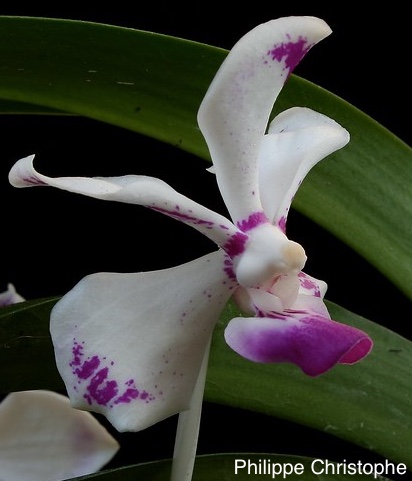
Approximately 6.5 cm across, non-fragrant. Petals sometimes twisted at 90° at their basal axis. White background marked with pink to magenta bars and streaks, mainly concentrated toward the apices and margins of the segments. Column short, fleshy, trilobed, and ringed with magenta pink. Lip deltoid, with descending margins, crimson-magenta, lighter at the base and becoming more intense toward the apex. Small lateral lobes, obtuse and rectangular.
Inflorescence
Up to 40 cm long, horizontal to slightly arched, equal to or slightly shorter than the leaves, usually bearing 10 to 16 flowers, but up to 20.
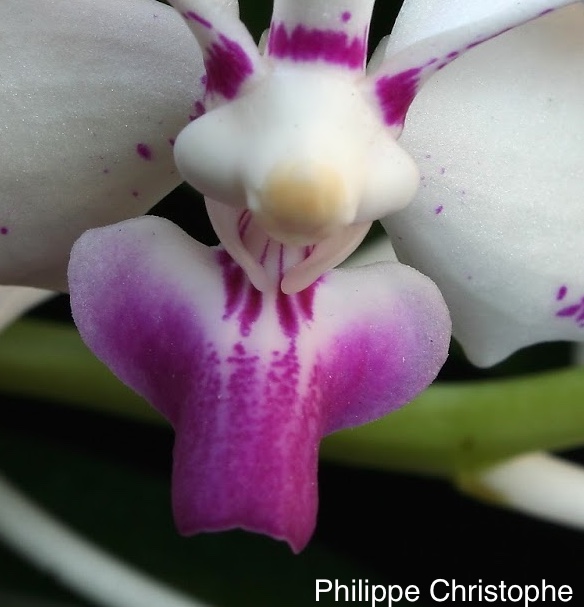
Plant
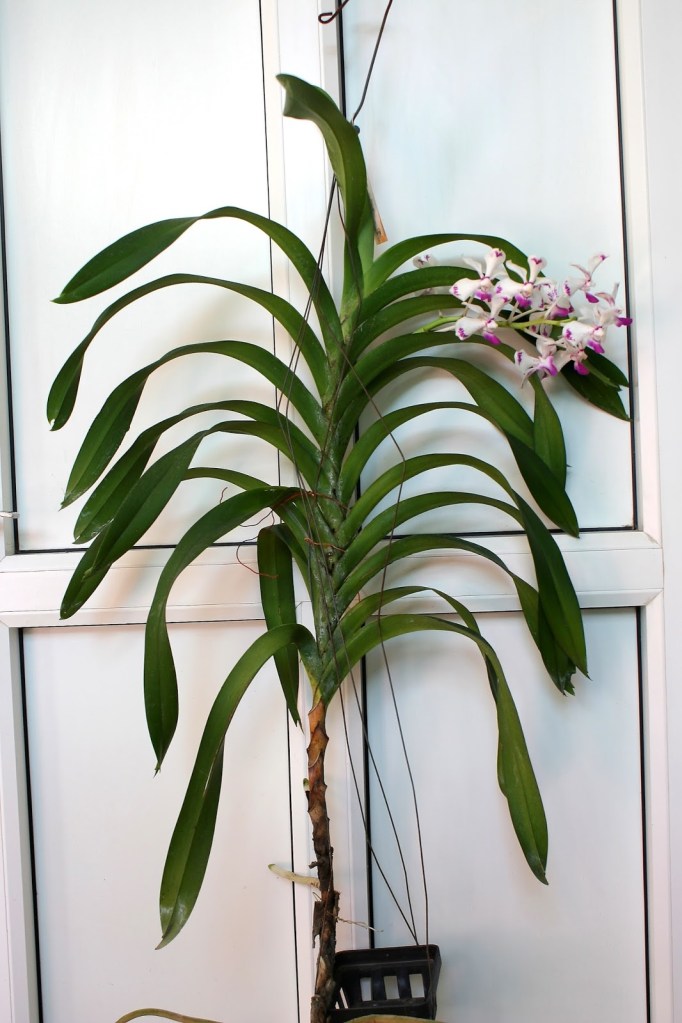
Robust, sometimes massive, typically around 60 cm tall but capable of exceeding 1.5 m. Leaves are arched, strap-shaped, coriaceous, and can reach up to 40 cm in length and 3 cm in width.
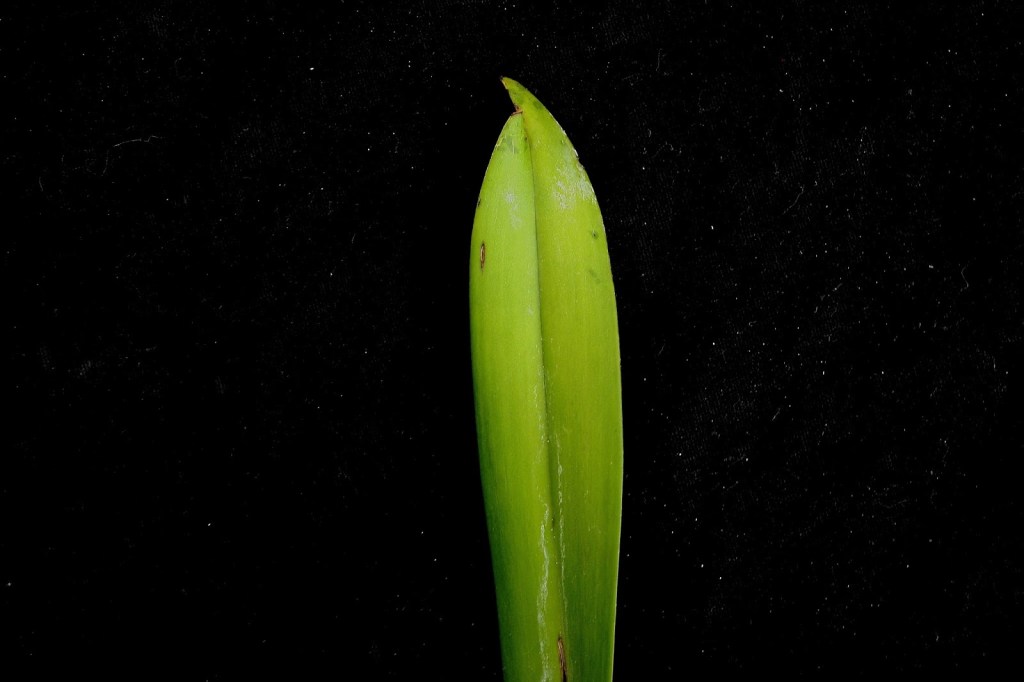
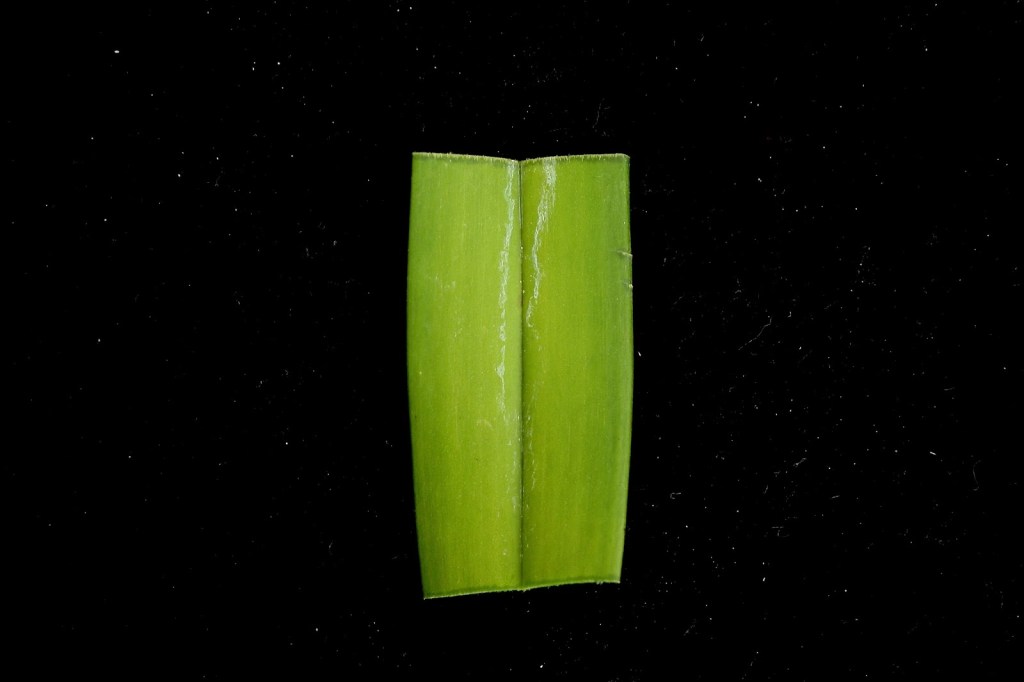
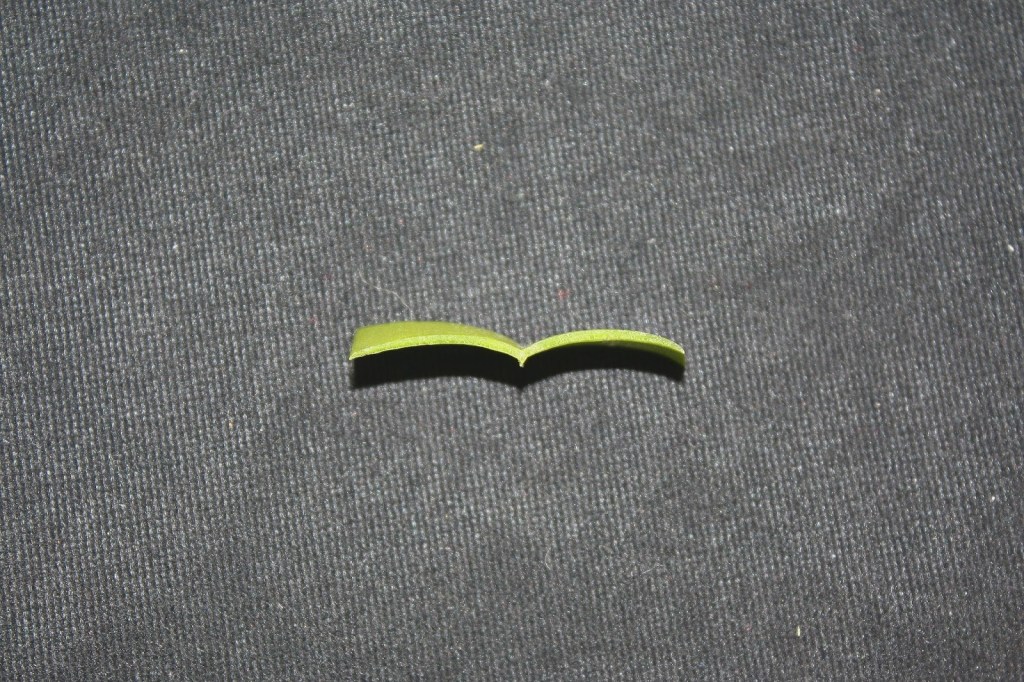
.
.
Version française
Vanda luzonica
Loher ex Rolfe 1915
Section Deltoglossa
Vanda luzonica, avec ses couleurs attrayantes et un motif coloré extrêmement gracieux, compte parmi les espèces les plus délicates et les plus attractives du genre.
Autrefois abondante sur les pentes du mont Pinatubo, sur l’île de Luçon aux Philippines, la terrible éruption volcanique de 1991 a entraîné un déclin marqué, voire une quasi-disparition de cette espèce dans son habitat naturel. Cependant, comme l’espèce a été largement multipliée par les amateurs et les professionnels, c’est l’un des cas où la culture a contribué à sa préservation.
Il reste néanmoins essentiel de bien l’identifier, car de nombreux spécimens étiquetés Vanda luzonica n’en sont pas réellement.
Le nom de l’espèce fait bien sûr référence à l’île de Luçon (Luzón en espagnol), aux Philippines.
Il s’agit typiquement d’une plante de la section Deltoglossa. Les plantes sont grandes et robustes, avec de larges feuilles rubanées et des fleurs portant un labelle en forme de delta, ainsi qu’une colonne courte, charnue et trilobée.
Vanda luzonica est souvent confondue avec Vanda suavis (Vanda tricolor var. suavis). Ces taxons proviennent de régions géographiquement éloignées. Les fleurs peuvent présenter certaines similitudes morphologiques ainsi qu’un motif de couleur pouvant entraîner une confusion, mais les différences sont nettes et constantes.
L’élégance de Vanda luzonica a naturellement conduit les obtenteurs à l’utiliser largement dans l’hybridation. Ainsi, elle est un contributeur majeur aux hybrides roses à rouges, transmettant une pigmentation forte et un motif caractéristique.
Sa couleur est dominante sur plusieurs générations et peut être retrouvée jusqu’à six générations dans certaines lignées hybrides. Plus encore, cette pigmentation tend à dominer les autres couleurs, notamment les tons jaunes et bruns.
D’autres caractéristiques sont également appréciées, comme la taille des fleurs, autour de 6,5 cm, ainsi que le nombre de fleurs par inflorescence, pouvant atteindre 20, ce qui dépasse celui de nombreuses autres espèces à grandes fleurs.
Lorsque Vanda luzonica est croisé avec Vanda sanderiana, on obtient Vanda Manila, un hybride majeur, car la plupart des hybrides roses modernes en sont issus.
—Vanda luzonica et la confusion avec Vanda Boschii
Vanda Boschii est le grex issu du croisement entre Vanda luzonica et Vanda tricolor. Il a été créé en 1927, peu après la description de Vanda luzonica en 1915.
De nombreuses plantes présentées comme Vanda luzonica sont en réalité des Vanda Boschii. Cette confusion est très répandue et apparaît même dans des expositions, certains spécimens primés (y compris par l’AOS) appartenant en réalité à ce grex, comme l’a noté le Dr Martin Motes.
Cette erreur se retrouve également dans la littérature spécialisée et sur de nombreux sites internet.
Pour comprendre cette confusion, il faut noter que le RHS enregistre les hybrides uniquement au niveau du grex. Ainsi, Vanda Boschii est enregistré comme Vanda luzonica × Vanda tricolor.
Les variétés botaniques ne sont pas incluses dans le nom du grex. Les plantes de Vanda Boschii dérivent souvent de Vanda tricolor var. suavis, ce qui influence fortement leur apparence.
Chez Vanda luzonica, la coloration rose à magenta apparaît sous forme de barres et de stries concentrées vers les extrémités et les marges des pétales et sépales. La colonne est également cerclée de rose magenta.
À l’inverse, les fleurs de Vanda Boschii présentent plus souvent une surface densément tachetée ou ponctuée héritée de suavis, avec une coloration qui tend à s’estomper vers les bords.
Le labelle n’est pas toujours strictement deltoïde, et les fleurs peuvent parfois être parfumées, ce qui constitue d’autres différences notables avec Vanda luzonica. Une base de couleur pourpre plus foncée peut également être un indice supplémentaire.
Tous ces caractères reflètent l’influence de Vanda tricolor var. suavis, confirmant qu’il s’agit bien de Vanda Boschii.
—Distribution
Apparemment endémique des provinces de Bulacan, Rizal et Zambales dans le centre de Luzon.
—Fleurs
Environ 6,5 cm de diamètre, non parfumées. Pétales parfois tordus à 90° à leur base. Fond blanc marqué de barres et stries rose à magenta, principalement concentrées vers les extrémités et les marges des segments.
Colonne courte, charnue, trilobée, annelée de rose magenta. Labelle deltoïde, à marges descendantes, cramoisi-magenta, plus clair à la base et devenant plus intense vers l’apex. Petits lobes latéraux, obtus et rectangulaires.
—Inflorescence
Jusqu’à 40 cm de long, horizontale à légèrement arquée, égale ou légèrement plus courte que les feuilles, portant généralement 10 à 16 fleurs, mais pouvant atteindre 20.
—Plante
Robuste, parfois massive, généralement autour de 60 cm de hauteur mais pouvant dépasser 1,5 m.
Feuilles arquées, rubanées, coriaces, pouvant atteindre 40 cm de long et 3 cm de large.
References / Bibliography
- Kew Species Database
- Motes, Martin R. (1988). Unraveling a Rainbow, Our modern Pink Hybrids, American Orchid Society Bulletin, Volume 57, Number 1, October 1988.
- Grove, David L. (1995). Vandas and Ascocendas.
- Motes, Martin R. (1997). Vandas, their Botany, History, and Culture.
- Motes, Martin R. (2013). Vanda hybridization, Renziana Vol. 3.
- Cootes, Jim (2013). The Orchids of the Philippines.
- Cootes, Jim & Tiong, George (2013). The Vanda Species of the Philippines, Renziana Vol. 3.
- Motes, Martin R. (2021). The Natural Genus Vanda.
- Roguenant, C. & Chiron, G. Vandas et genres voisins des orchidées spectaculaires.

