Vanda tessellata
(Roxburgh) W. J. Hooker ex G. Don, 1850
Section Vanda
Type species of the genus.
Version française complète ci-dessous.
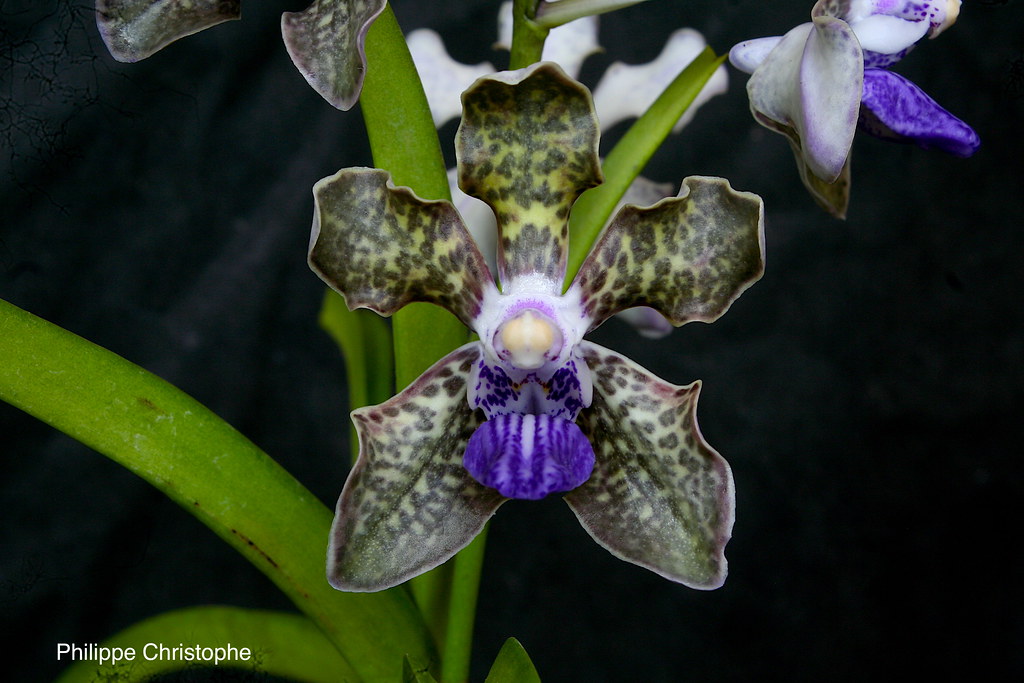
Vanda tessellata is a species of particular importance in many respects. The flowers, with a strong, captivating and unforgettable fragrance, display colors often marked by striking contrasts and may bloom several times a year.
Historically, in horticulture as well as in botany, Vanda tessellata is a major species: it is the type species of the genus. Indeed, it is the first associated with the epithet Vanda, Robert Brown establishing the genus in 1820, later fully adopted and validated by David Don. It is also the first species of Vanda known to have flowered in Europe, as early as 1819.
William Roxburgh, director of the Calcutta Botanical Garden from 1793 to 1819, described the species under the name Epidendrum tessellatum in 1795. In the same year, William Jones used the term Vanda to designate Asian epiphytic orchids in the Asiatic Researches (1795, 4:302).
Roxburgh later sent plants to England to Sir Conrad Loddiges and Sir Joseph Banks. In autumn 1819, at Spring Grove, Joseph Banks was the first to flower a Vanda in Europe, according to Veitch & Sons (1891).
However, it was Robert Brown who, in 1820, established the genus Vanda as it is understood today, based on plants sent by Roxburgh.
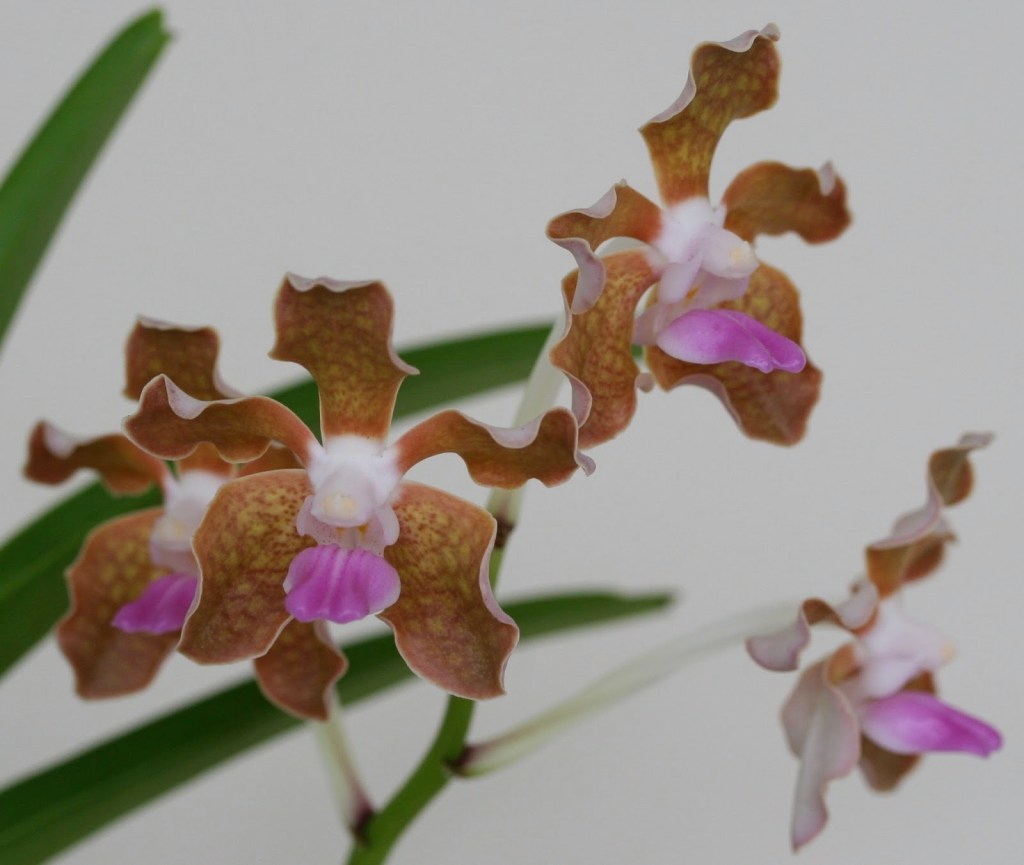
Formerly treated as distinct species, Vanda tessellata and Vanda roxburghii are now generally considered synonymous.
However, Martin Motes, in The Natural Genus Vanda, proposes treating this entity as a complex divided into two subspecies: Vanda tessellata subsp. tessellata and Vanda tessellata subsp. tesselloides.
In this interpretation, Vanda tessellata corresponds to subsp. tessellata, while Vanda roxburghii is assimilated to subsp. tesselloides. This treatment is also followed by the Kew Plants of the World Online database.
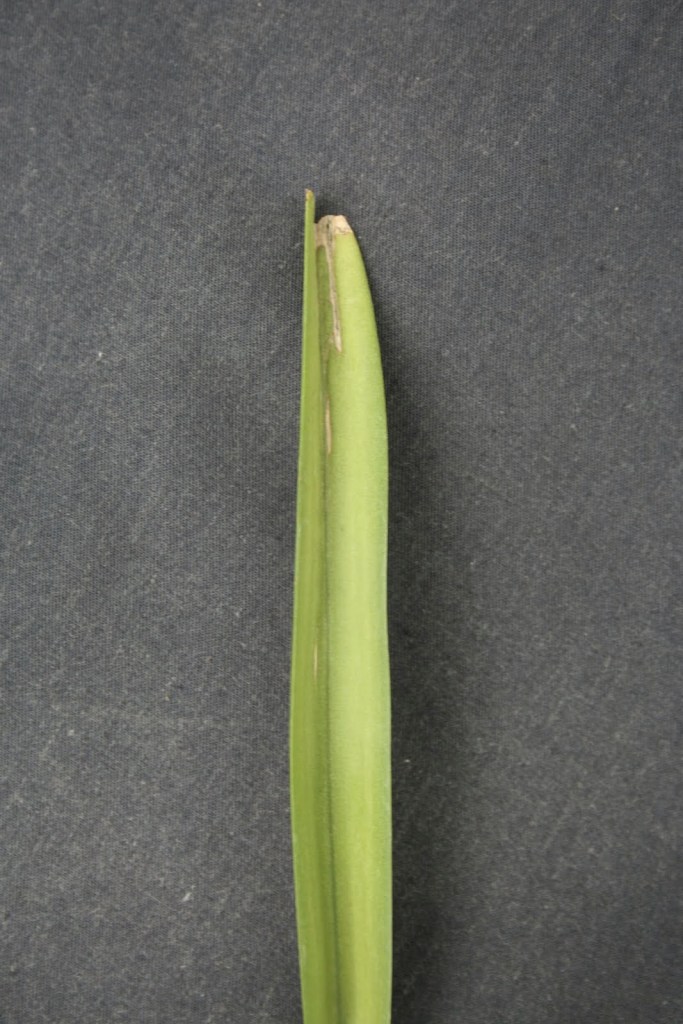
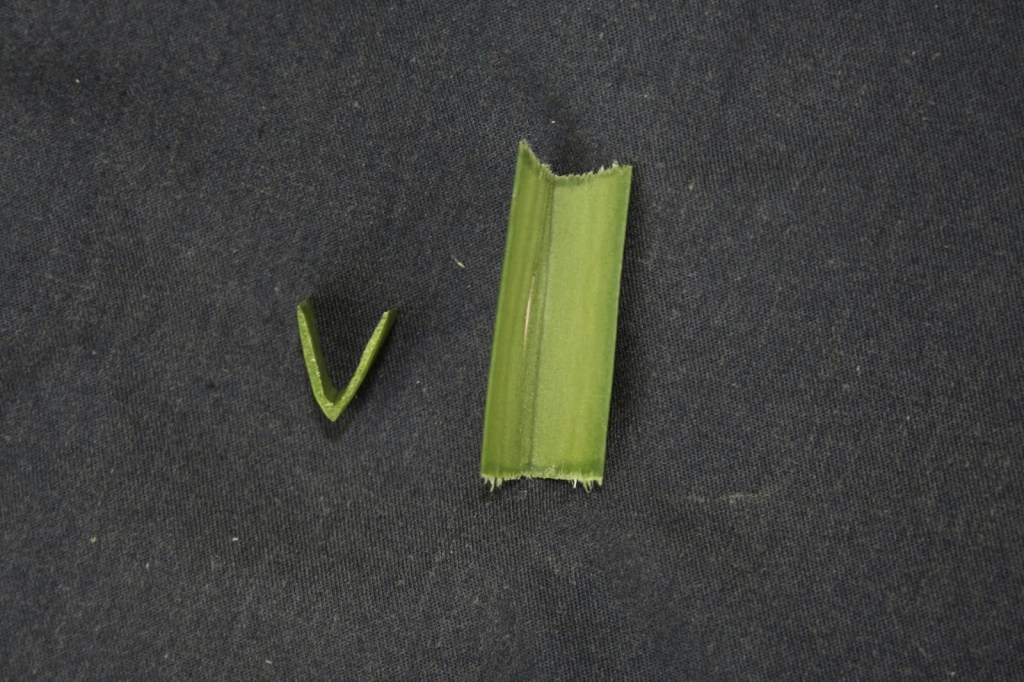
Thus, the wide distribution of the species is not geographically uniform. Morphologically, subsp. tessellata produces larger plants and flowers, but generally fewer in number. The lateral lobes of the labellum are longer and narrower, with a more divergent apex. Leaves are also broader and not cleft, unlike those of subsp. tesselloides.
This significant variability, both morphological and chromatic, reflects a natural complex still undergoing evolutionary stabilization.
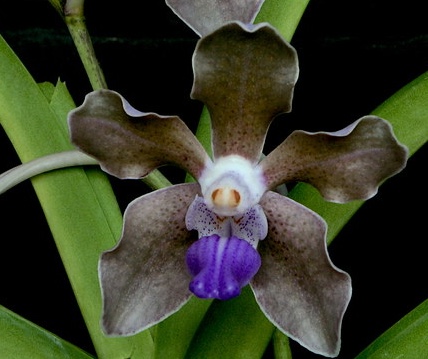
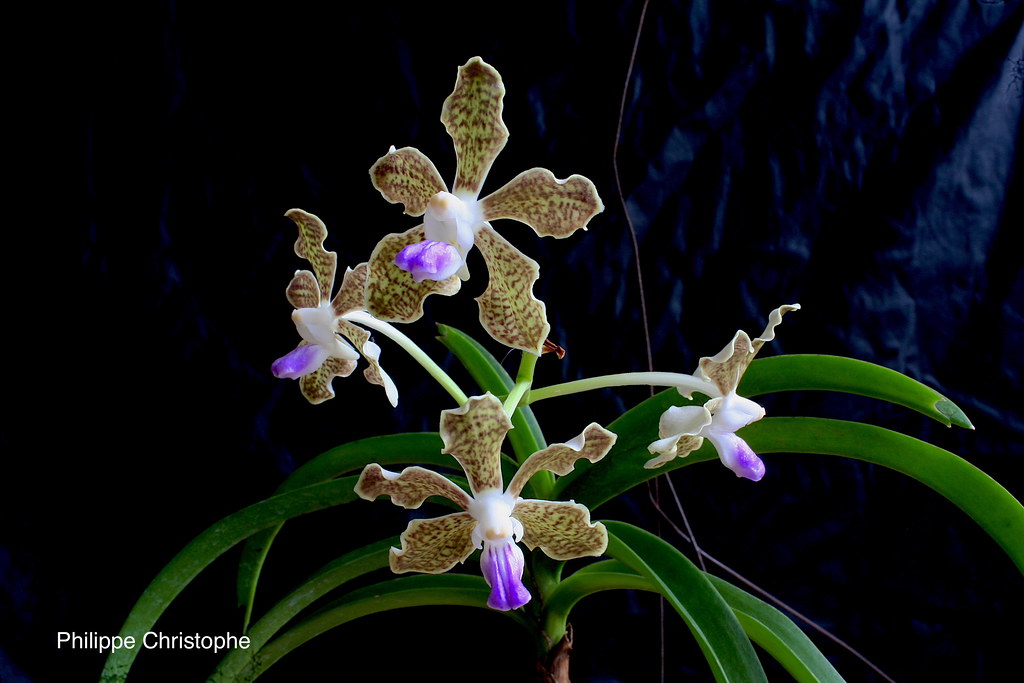
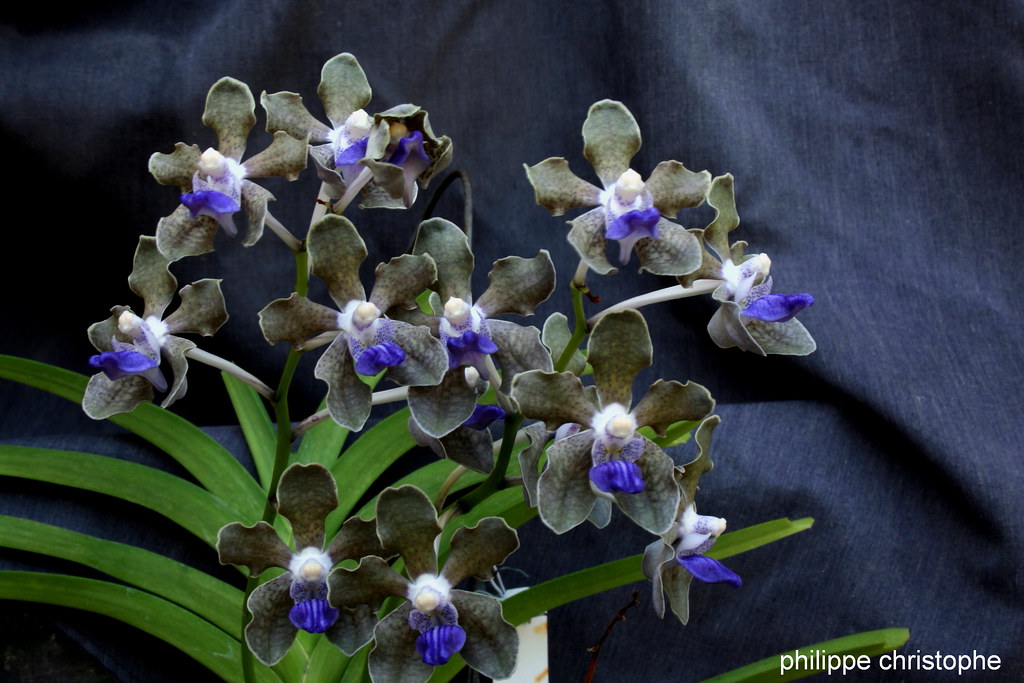
Vanda tessellata subsp. tessellata occurs in India and Sri Lanka. The most common form bears grey flowers with a blue lip, often sold in horticulture under the misleading name Vanda tessellata Blue. White, pink, deep purple to nearly black forms exist, with lips ranging from pink to blue or violet. Plants grow from sea level up to about 500 m.
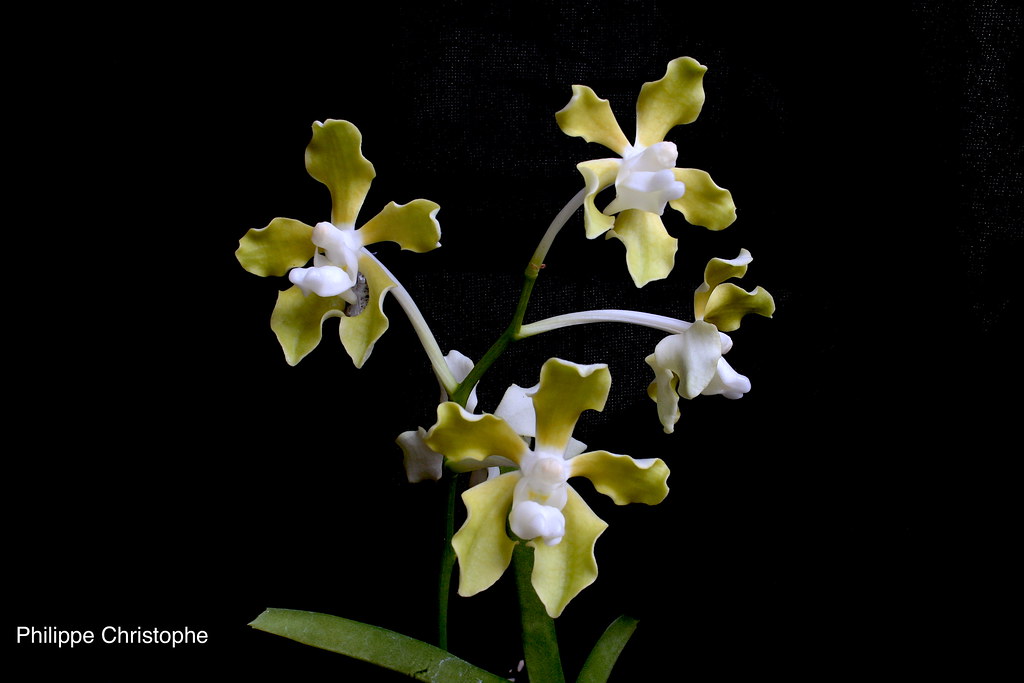
Vanda tessellata subsp. tesselloides has a wider distribution: Assam, Bangladesh, south-central China, East Himalaya, West Himalaya, Myanmar, Nepal and Vietnam. Flower color is also highly variable, but most often greenish-yellow with grey-brown tessellations and a blue to violet lip, sometimes pink. In relation to its habitat, this subspecies is found at higher elevations, from sea level up to about 1000 m.
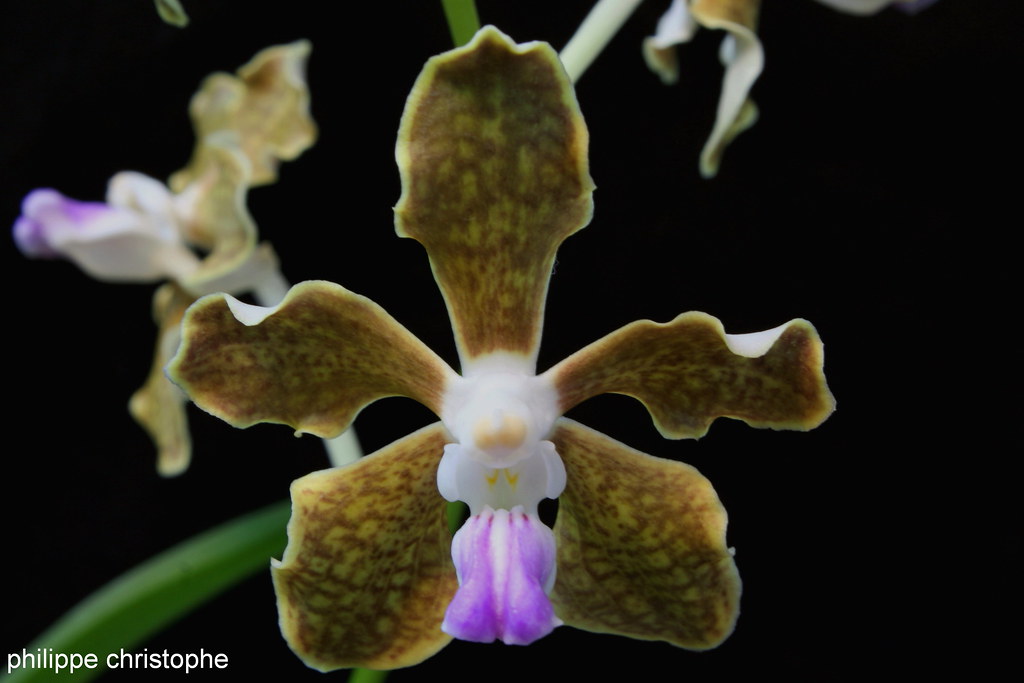
Independently of these infraspecific variations, Vanda tessellata shares common features across both subspecies. As in all species of the section Vanda, it is recognized by its fleshy labellum. The finely pointed lateral lobes are among the most distinctive features of the species, helping to distinguish Vanda tessellata from closely related plants or hybrids often confused with it.
The alba and flava forms are relatively common in horticulture.
The leaves are also used in traditional Indian medicine (Ayurveda).
A natural hybrid exists with Vanda coerulea: Vanda × amoena, unfortunately still rare in cultivation.
Vanda tessellata is considered easy to grow and, under optimal conditions, may flower throughout the year. It requires high light and, due to its wide ecological range, adapts well to different cultivation methods.
The wide range of colors, the size and long-lasting nature of the flowers, their texture, fragrance, and the arrangement of flowers along the inflorescence explain the prominent role Vanda tessellata plays in hybridization. The color and texture of the labellum in certain forms have been retained in many hybrids, some of which display very dark, nearly black tones. Alba forms have also been widely used.
It thus constitutes one of the historical pillars in the development of modern hybrid lines within the genus.
The name of the species is derived from the Latin “tessella”, meaning “small square tile”.
Synonyms
Vanda roxburghii, Vanda tesselloides, Vanda unicolor, Aerides tessellata, Cymbidium allagnata, Cymbidium tessellatum, Cymbidium tesselloides, Epidendrum teselatum, Epidendrum tesseloides.
Distribution
The Vanda tessellata complex is distributed over a vast territory ranging from the Indian subcontinent (India, Sri Lanka, Nepal, Bangladesh, East Himalaya) to Vietnam, including Assam, Myanmar (Burma), south-central China and the West Himalaya.
Vernacular names
Rasna (Bengali), Vanda (वांदा), Nai, Perasara (Hindi), Bandanike, Badanika, Jkeevanthige (Kannada), Aasna (Marathi), Ilkum (Oriya), Atirasa, Bhujangakshi, Chhatraki, Dronagandhika (Sanskrit), Kantanakuli (Tamil), Chittiveduri, Kanapabandanika (Telugu), Banda (Urdu).
Flowers
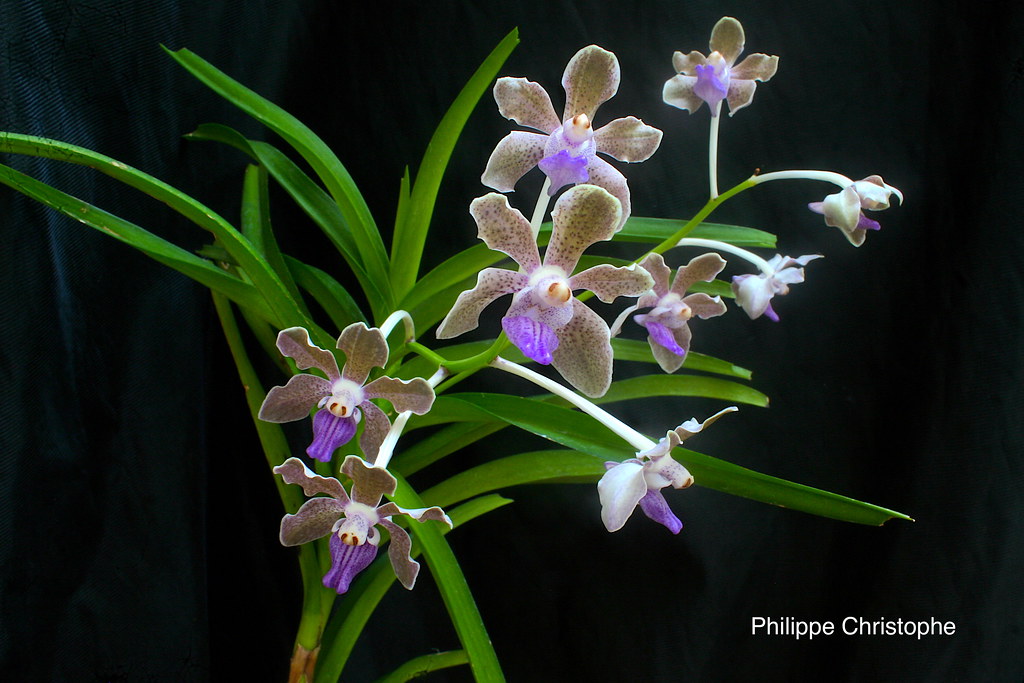
5 to nearly 7 cm vertically in subsp. tessellata, which has larger flowers than subsp. tesselloides. Strongly fragrant.
Extremely variable in color: grey, pink, deep purple to nearly black, greenish-yellow, white, more or less tessellated with grey or brown.
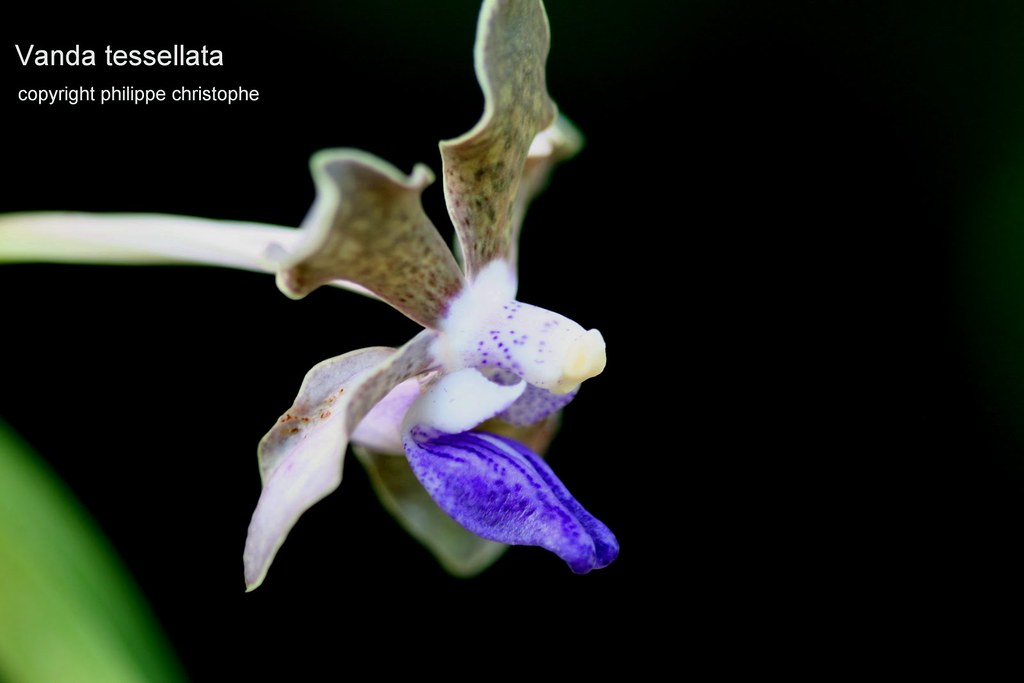
Margins of petals and sepals undulate. Labellum fleshy, slightly concave and curved downward, violet, blue or pink. The base of the midlobe may show a weakly deltoid outline, although this feature remains variable. Lateral lobes lanceolate. Spur short and conical.
Inflorescence
Erect to sub-erect, 15 to 30 cm long, bearing 4 to 10 flowers. The arrangement of the flowers is superior to that of many other species.
Plant
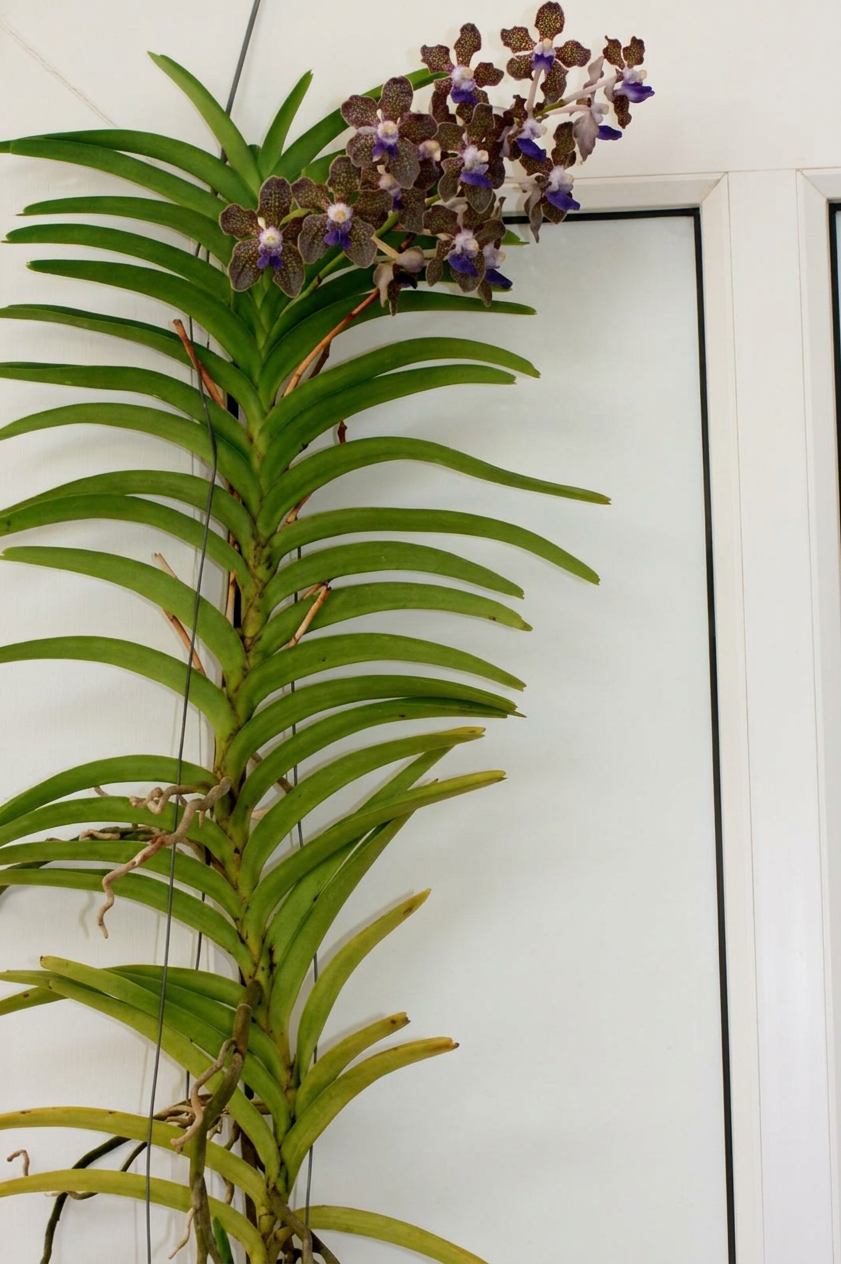
Medium-sized plant, approximately 20 to 60 cm, larger in older specimens. Leaves fleshy, strongly recurved and conduplicate. The lower stem frequently produces adventitious roots along the basal section.
Version française
Vanda tessellata
(Roxburgh) W. J. Hooker ex G. Don, 1850
Section Vanda
Espèce type du genre
Vanda tessellata est une espèce d’une importance particulière à plusieurs égards. Les fleurs, avec un parfum puissant, envoûtant et inoubliable, présentent des couleurs souvent marquées par des contrastes saisissants et peuvent fleurir plusieurs fois par an.
Historiquement, en horticulture comme en botanique, Vanda tessellata est une espèce majeure : il s’agit de l’espèce type du genre. En effet, c’est la première associée à l’épithète Vanda, Robert Brown établissant le genre en 1820, ensuite pleinement adopté et validé par David Don. C’est également la première espèce de Vanda connue à avoir fleuri en Europe, dès 1819.
William Roxburgh, directeur du Jardin botanique de Calcutta de 1793 à 1819, a décrit l’espèce sous le nom d’Epidendrum tessellatum en 1795. La même année, William Jones utilise le terme Vanda pour désigner les orchidées épiphytes asiatiques dans les Asiatic Researches (1795, 4:302).
Roxburgh envoya ensuite des plantes en Angleterre à Sir Conrad Loddiges et Sir Joseph Banks. À l’automne 1819, à Spring Grove, Joseph Banks fut le premier à faire fleurir un Vanda en Europe, selon Veitch & Sons (1891).
Cependant, c’est Robert Brown qui, en 1820, établit le genre Vanda tel qu’il est compris aujourd’hui, à partir de plantes envoyées par Roxburgh.
Autrefois traitées comme des espèces distinctes, Vanda tessellata et Vanda roxburghii sont aujourd’hui généralement considérées comme synonymes.
Cependant, Martin Motes, dans The Natural Genus Vanda, propose de traiter cet ensemble comme un complexe divisé en deux sous-espèces : Vanda tessellata subsp. tessellata et Vanda tessellata subsp. tesselloides.
Dans cette interprétation, Vanda tessellata correspond à la subsp. tessellata, tandis que Vanda roxburghii est assimilée à la subsp. tesselloides. Ce traitement est également suivi par la base de données Kew Plants of the World Online.
Ainsi, la large distribution de l’espèce n’est pas géographiquement uniforme. Morphologiquement, la subsp. tessellata produit des plantes et des fleurs plus grandes, mais généralement en plus faible nombre. Les lobes latéraux du labelle sont plus longs et plus étroits, avec un apex plus divergent. Les feuilles sont également plus larges et non fendues, contrairement à celles de la subsp. tesselloides.
Cette variabilité importante, à la fois morphologique et chromatique, reflète un complexe naturel encore en cours de stabilisation évolutive.
Vanda tessellata subsp. tessellata est présente en Inde et au Sri Lanka. La forme la plus commune présente des fleurs grises avec un labelle bleu, souvent vendue en horticulture sous le nom erroné de Vanda tessellata Blue. Des formes blanches, roses, pourpre profond à presque noir existent, avec des labels allant du rose au bleu ou au violet. Les plantes poussent du niveau de la mer jusqu’à environ 500 m d’altitude.
Vanda tessellata subsp. tesselloides possède une distribution plus large : Assam, Bangladesh, sud de la Chine, Himalaya oriental, Himalaya occidental, Myanmar, Népal et Vietnam. La couleur des fleurs est également très variable, mais le plus souvent jaune verdâtre avec des tessellations gris-brun et un labelle bleu à violet, parfois rose. En relation avec son habitat, cette sous-espèce se rencontre à des altitudes plus élevées, du niveau de la mer jusqu’à environ 1000 m.
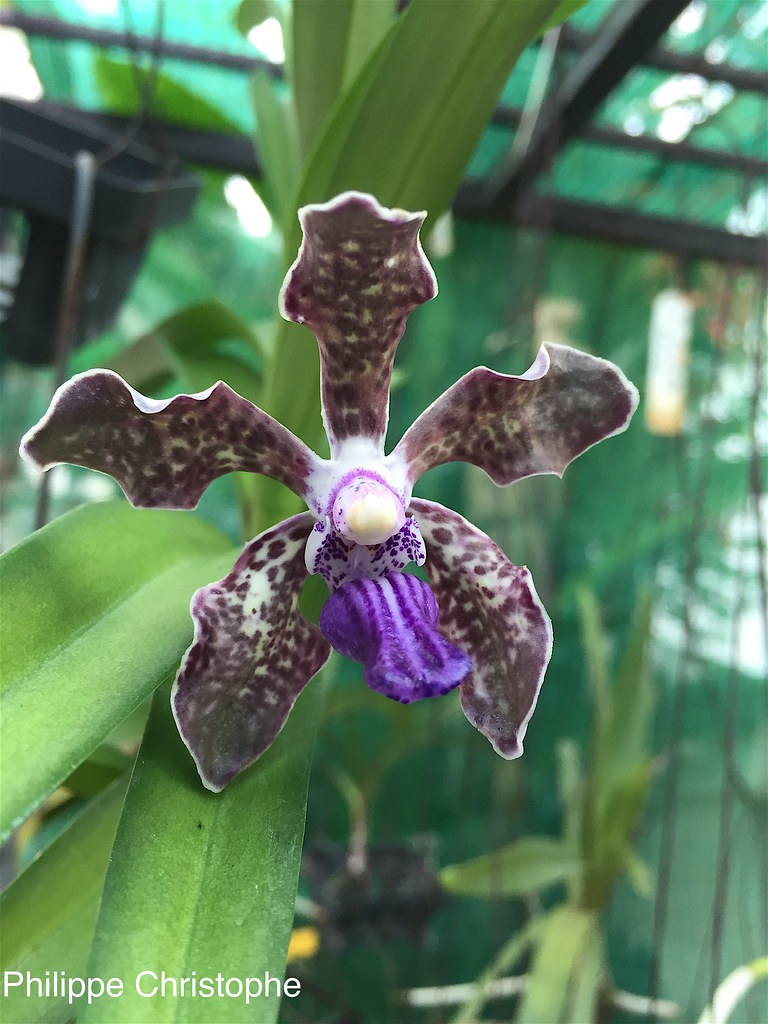
Indépendamment de ces variations infraspécifiques, Vanda tessellata présente des caractères communs aux deux sous-espèces. Comme chez toutes les espèces de la section Vanda, elle est reconnue par son labelle charnu. Les lobes latéraux finement pointus comptent parmi les caractéristiques les plus distinctives de l’espèce, permettant de distinguer Vanda tessellata des plantes étroitement apparentées ou des hybrides souvent confondus avec elle.
Les formes alba et flava sont relativement communes en horticulture.
Les feuilles sont également utilisées en médecine traditionnelle indienne (Ayurveda).
Un hybride naturel existe avec Vanda coerulea : Vanda × amoena, malheureusement rare en culture.
Vanda tessellata est considérée comme facile à cultiver et, dans des conditions optimales, peut fleurir tout au long de l’année. Elle nécessite une forte luminosité et, en raison de sa large amplitude écologique, s’adapte bien à différentes méthodes de culture.
La grande diversité des couleurs, la taille et la longévité des fleurs, leur texture, leur parfum, ainsi que la disposition des fleurs le long de l’inflorescence expliquent le rôle important que joue Vanda tessellata dans l’hybridation. La couleur et la texture du labelle dans certaines formes ont été conservées dans de nombreux hybrides, dont certains présentent des tons très sombres, presque noirs. Les formes alba ont également été largement utilisées.
Ainsi, elle constitue l’un des piliers historiques du développement des lignées hybrides modernes au sein du genre.
Le nom de l’espèce est dérivé du latin « tessella », signifiant « petit
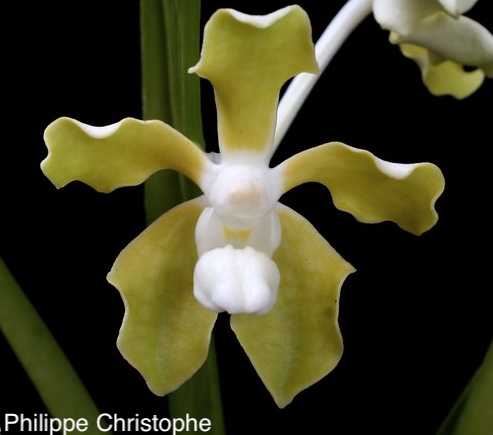
Synonymes
Vanda roxburghii, Vanda tesselloides, Vanda unicolor, Aerides tessellata, Cymbidium allagnata, Cymbidium tessellatum, Cymbidium tesselloides, Epidendrum teselatum, Epidendrum tesseloides.
Distribution
Le complexe Vanda tessellata est distribué sur un vaste territoire allant du sous-continent indien (Inde, Sri Lanka, Népal, Bangladesh, Himalaya oriental) jusqu’au Vietnam, incluant l’Assam, le Myanmar (Birmanie), le sud de la Chine et l’Himalaya occidental.
Noms vernaculaires
Rasna (bengali), Vanda (वांदा), Nai, Perasara (hindi), Bandanike, Badanika, Jkeevanthige (kannada), Aasna (marathi), Ilkum (oriya), Atirasa, Bhujangakshi, Chhatraki, Dronagandhika (sanskrit), Kantanakuli (tamil), Chittiveduri, Kanapabandanika (telugu), Banda (urdu).
Fleurs
5 à près de 7 cm verticalement chez la subsp. tessellata, qui possède des fleurs plus grandes que la subsp. tesselloides. Fortement parfumées.
Extrêmement variables en couleur : gris, rose, pourpre profond à presque noir, jaune verdâtre, blanc, plus ou moins tessellées de gris ou de brun.
Les marges des pétales et des sépales sont ondulées. Le labelle est charnu, légèrement concave et courbé vers le bas, violet, bleu ou rose. La base du lobe médian peut présenter un contour faiblement deltoïde, bien que ce caractère reste variable. Lobes latéraux lancéolés. Éperon court et conique.
Inflorescence
Érigée à sub-érigée, de 15 à 30 cm de long, portant 4 à 10 fleurs. La disposition des fleurs est supérieure à celle de nombreuses autres espèces.
Plante
Plante de taille moyenne, d’environ 20 à 60 cm, plus grande chez les sujets âgés. Feuilles charnues, fortement recourbées et condupliquées. La partie inférieure de la tige produit fréquemment des racines le long de la partie inférieure de la tige.
References / Bibliography
Kew Species Database
Motes, Martin R. (2013). Vanda hybridization, Renziana Vol.3/2013
Grove, David L. (1995). Vandas and Ascocendas.
Motes, Martin R. (1997). Vandas, their Botany, History, and Culture.
Motes, Martin R. (2021). The Natural Genus Vanda.
Roguenant, C. & Chiron, G. Vandas et genres voisins des orchidées spectaculaires.

